Introducing Beyond the Map
Here at Rust.Observer, we believe that every monument has a story worth telling. And sometimes, the most interesting monuments are the ones that don’t exist in Rust. Yet.
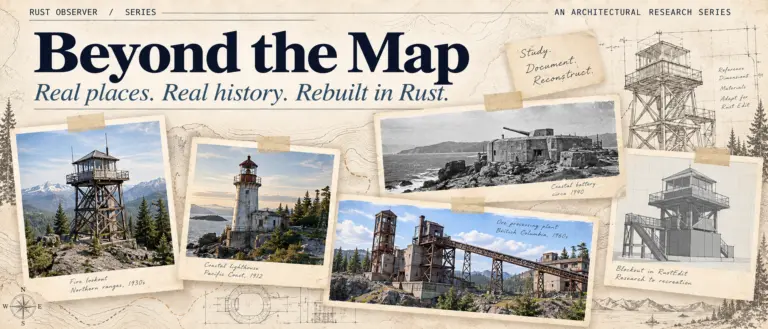
Here at Rust.Observer, we believe that every monument has a story worth telling. And sometimes, the most interesting monuments are the ones that don’t exist in Rust. Yet.
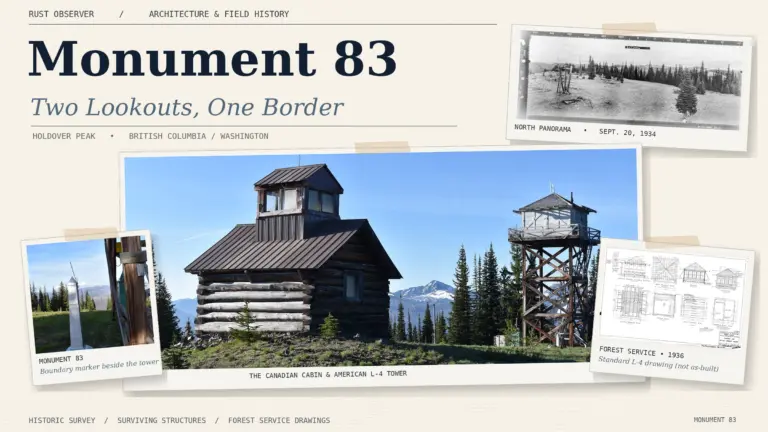
At Monument 83, an American fire lookout cabin stands in Canada while its successor rises just across the border in Washington. Archival photographs, original L-4 blueprints, forgotten observers, the mystery of Pasayten Pete, and recent wildfires reveal a century of history on Holdover Peak—and an extraordinary subject for reconstruction in Rust.

Rust no longer exists in a single workshop. Facepunch develops the PC game, Double Eleven converts it for Console, and Level Infinite is building a distinct Mobile experience — three versions sharing one name without always sharing the same game.
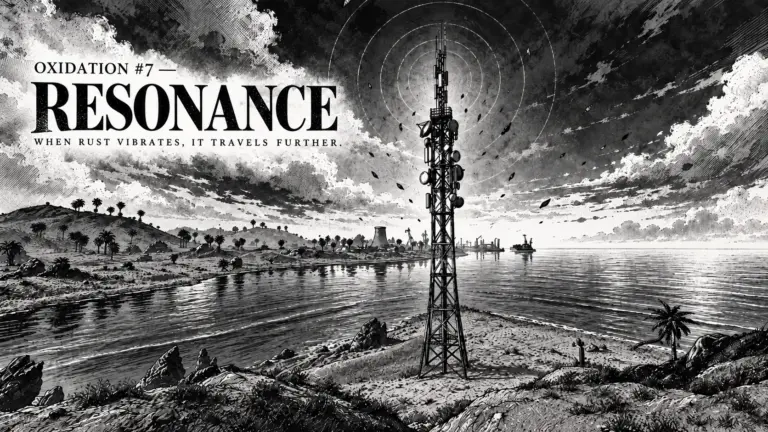
Rust does not end at the edge of the island. Creators, viewers, platforms, events and communities carry its stories outward — and sometimes bring them back changed.
By the time we spawn on the beach on April 26, 1983, merchandise is already everywhere. Pac-Man has escaped the arcade. Contemporary advertising has him on watches, shoes, plush toys, cereal and almost anything else capable of carrying a yellow circle with a mouth. By 1983, his own official history remembers the character being described…
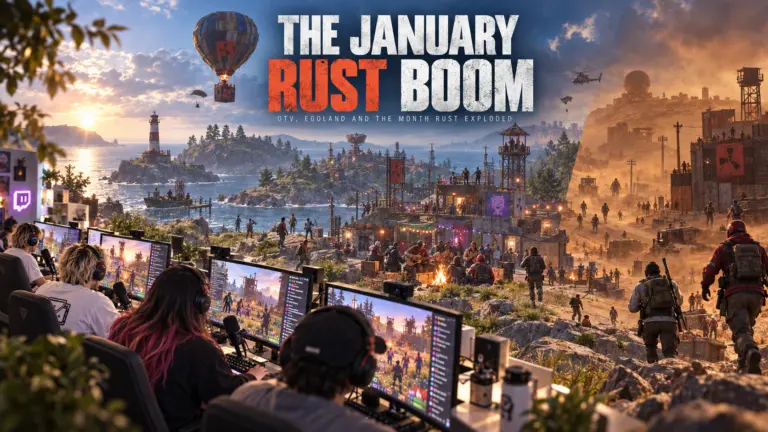
January 2021 changed the scale of Rust. OTV, Egoland and a massive influx of streamers brought millions of eyes to the game, while revealing that Rust could support far more than one way to play.
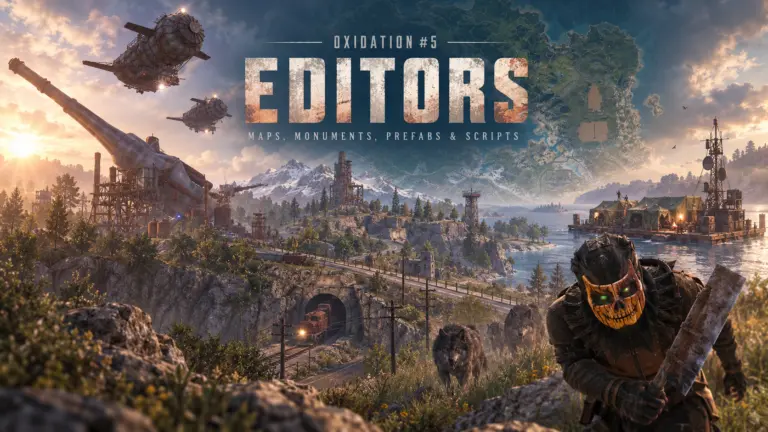
Beyond Facepunch, another layer of Rust is built by its Editors: Engineers creating monuments and tiny prefabs, Cartographers reshaping entire islands, and Scripters turning familiar places into new experiences.
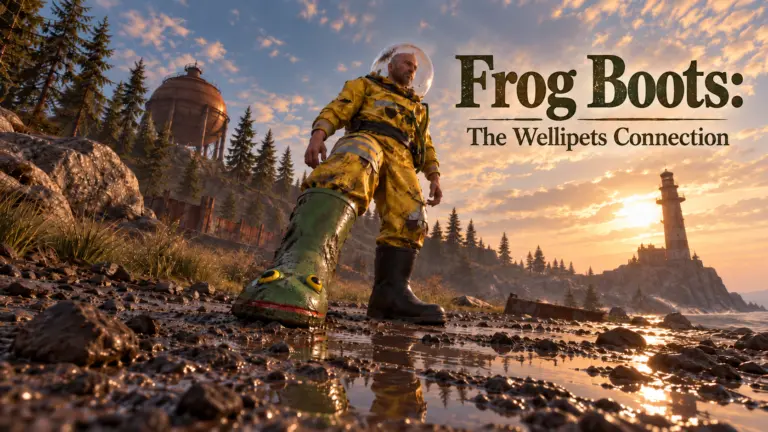
The old Rust Hazmat disappeared, but its strangest boot survived. From a British Frog Wellington born in 1983 to an Early Access reward and an official Wellipets collaboration forty-one years later, the Frog Boots made an extraordinary round trip between the real world and Rust.
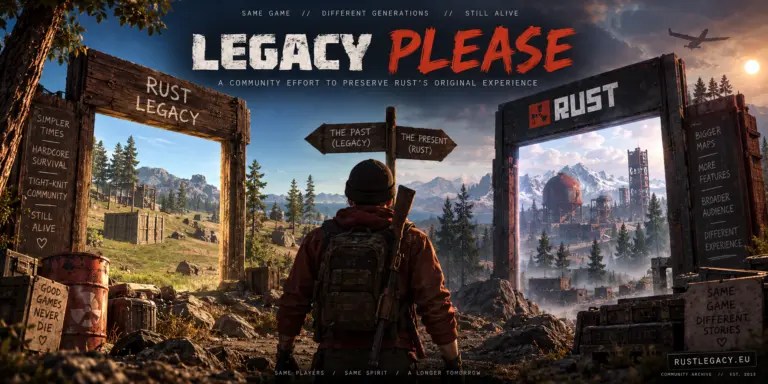
What if Rust Legacy appeared on Steam today? Oxidation #4 rediscovers the original Rust through contemporary reviews, gameplay tests, Experimental, game preservation projects and RustLegacy.eu.

Rust is built from thousands of personal decisions. Talented Ego follows the developers, artists and designers whose judgment, persistence and individual fingerprints became part of the game.