Landmarks #1 — The January Rust Boom
January 2021 changed the scale of Rust. OTV, Egoland and a massive influx of streamers brought millions of eyes to the game, while revealing that Rust could support far more than one way to play.
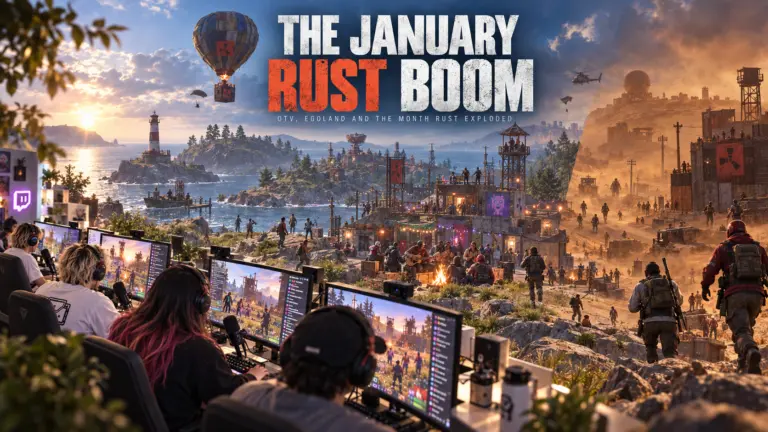
January 2021 changed the scale of Rust. OTV, Egoland and a massive influx of streamers brought millions of eyes to the game, while revealing that Rust could support far more than one way to play.
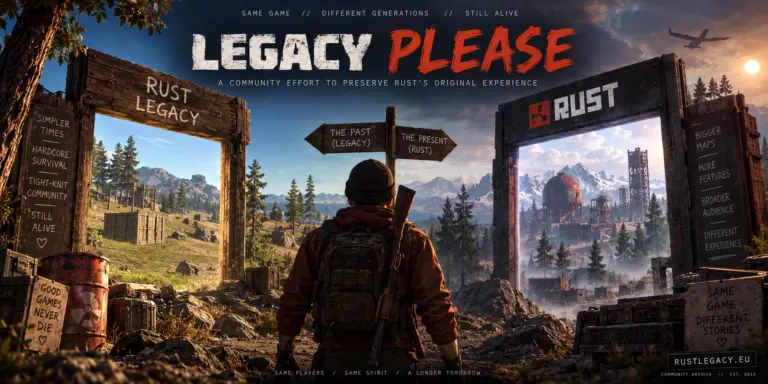
What if Rust Legacy appeared on Steam today? Oxidation #4 rediscovers the original Rust through contemporary reviews, gameplay tests, Experimental, game preservation projects and RustLegacy.eu.
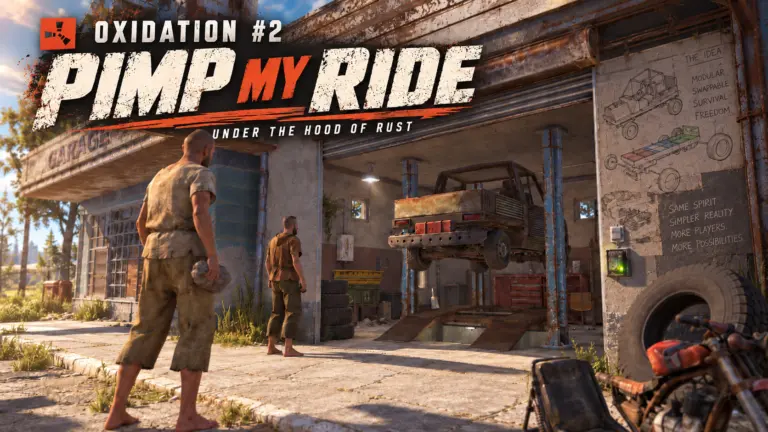
Rust’s visible updates are only part of its history. Behind them, Facepunch has rebuilt networking, abandoned HDRP while keeping its assets, integrated outside technologies, taken control of middleware, modified Unity itself and begun developing a Rust Render Pipeline. Pimp My Ride follows the machinery underneath the game.
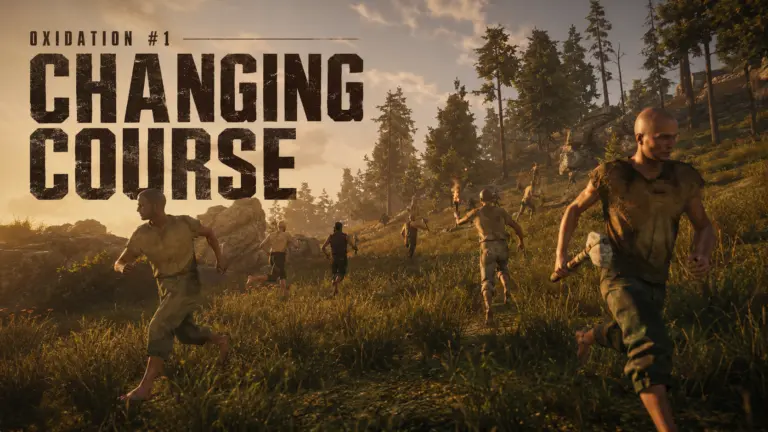
Rust began by leaving its DayZ-inspired direction behind. Over the next thirteen years, Facepunch kept testing new answers: interactive monuments, NPC settlements, offshore worlds, wipe events, player-maintained infrastructure and connected servers.
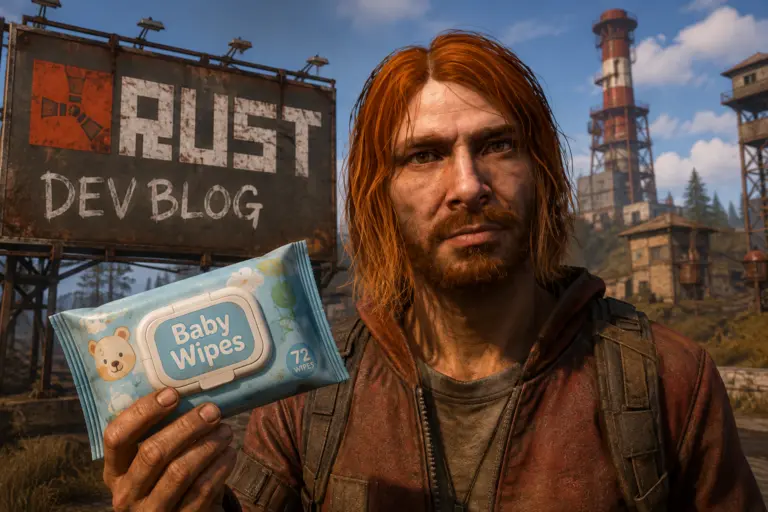
Rust once tried to avoid wipes. Today, players schedule around them, servers build identities around them, and Facepunch has even given the final hours of a wipe their own gameplay. This is how a technical problem became part of Rust’s culture.