
Rust, Elsewhere
Rust no longer exists in a single workshop. Facepunch develops the PC game, Double Eleven converts it for Console, and Level Infinite is building a distinct Mobile experience — three versions sharing one name without always sharing the same game.
Every once in a while, Rust Observer manages to overlook something so obvious that it starts looking deliberate.
Rust exists on consoles.
Rust exists on mobile phones.
Yes.
We know.
The reason we haven’t talked much about either of them is fairly simple: Rust Observer watches what can be observed inside Rust itself.
We’ve always applied that rule to PC too.
We don’t review processors, graphics cards, framerates, cooling systems or gaming laptops. The computer has never really been the subject here; it is simply the machine putting Rust on a screen.
There would be little reason to suddenly make the hardware important because that screen belongs to an Xbox, a PlayStation, a tablet or a phone.
The island is what interests us.
Except that, in this case, changing the machine eventually created different islands.
Three Rusts, Three Workshops
The name on all three games is still Rust.
The people building them are different.
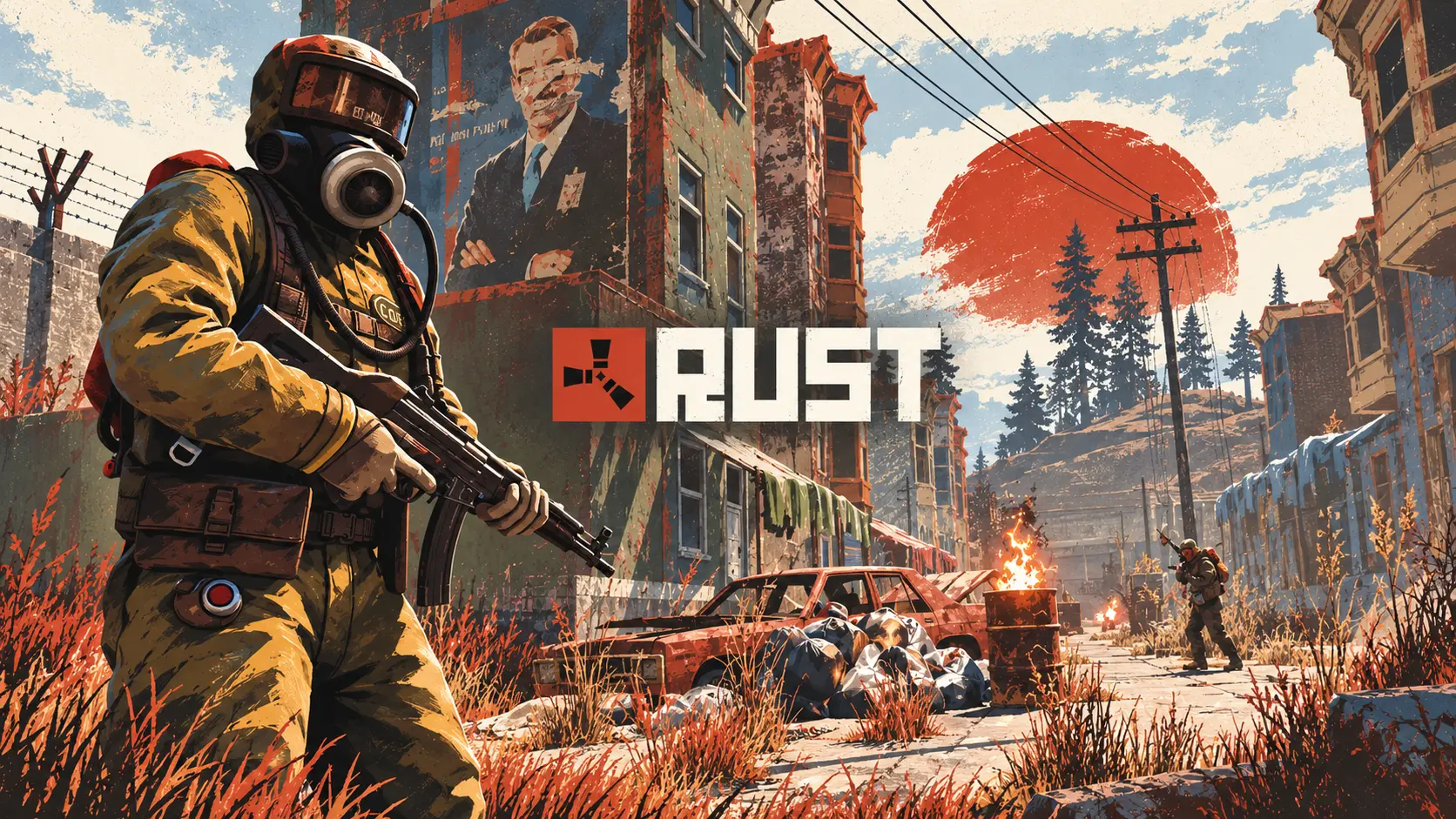
The PC game — desktop or laptop makes no difference here — is developed and supported by Facepunch.
Rust Console Edition is developed and published by Double Eleven. It has its own development branch, roadmap, servers and technical support. Double Eleven describes it as its own version of Facepunch’s game, designed specifically for console players.
Rust Mobile is officially authorised by Facepunch, while Level Infinite and its mobile development team are building the game in collaboration with them. Facepunch calls them its development partners; the Mobile team describes Rust Mobile as an independent game rather than a port.
Even geographically, those workshops are separate.
Facepunch builds Rust from Birmingham. Double Eleven develops Console Edition from Middlesbrough, only a few hundred kilometres farther north in England. The Rust Mobile project reaches much farther east through Level Infinite’s operations in Singapore.
Two versions of Rust are being built surprisingly close together.
The third is being developed from the other side of the world.
Same name. Same origin.
Very different workshops.
From the player’s side, however, all three still say RUST.
And that’s where things start getting confusing.
Wrong Door
Facepunch announces something new on their facebook page.
Somewhere underneath it, eventually:
When Console?
When Mobile?
It has become another relative of the old Legacy please tradition.
The difference is that Facepunch can actually decide what happens to Legacy. Console and Mobile have their own development teams.
Still, blaming the players entirely would be unfair.
Most people don’t buy a game after studying its corporate genealogy. They see the name, screenshots, trailer and store page.
They buy Rust.
The public identity of Play Rust existed before either Console Edition or Rust Mobile. Facepunch remained the original public entrance to the game while other companies built new versions behind that name.
So when Facepunch announces a feature, a Console player asking “when do we get it?” isn’t standing in some completely unrelated building.
They’re standing at the original entrance to Rust.
It’s just no longer the workshop where their particular Rust is being built.
Facepunch’s own support structure makes that separation explicit. PC belongs to Facepunch’s support. Console belongs to Double Eleven. Mobile belongs to the Rust Mobile operation around Level Infinite.
The branding invites everyone through the same front door.
The technical work happens elsewhere.
Same Enough to Confuse
Looking at the games makes that confusion even easier to understand.
The surprise is that Console, despite the enormous technical conversion underneath, often looks remarkably close to Rust PC.
Mobile does the opposite: the world remains recognisably Rust, while the interface and moment-to-moment experience change almost everywhere you look.
A Console screenshot can be remarkably difficult to distinguish from PC at first glance. The world, HUD and overall presentation remain familiar enough that some interface changes feel closer to a new skin than a different game.
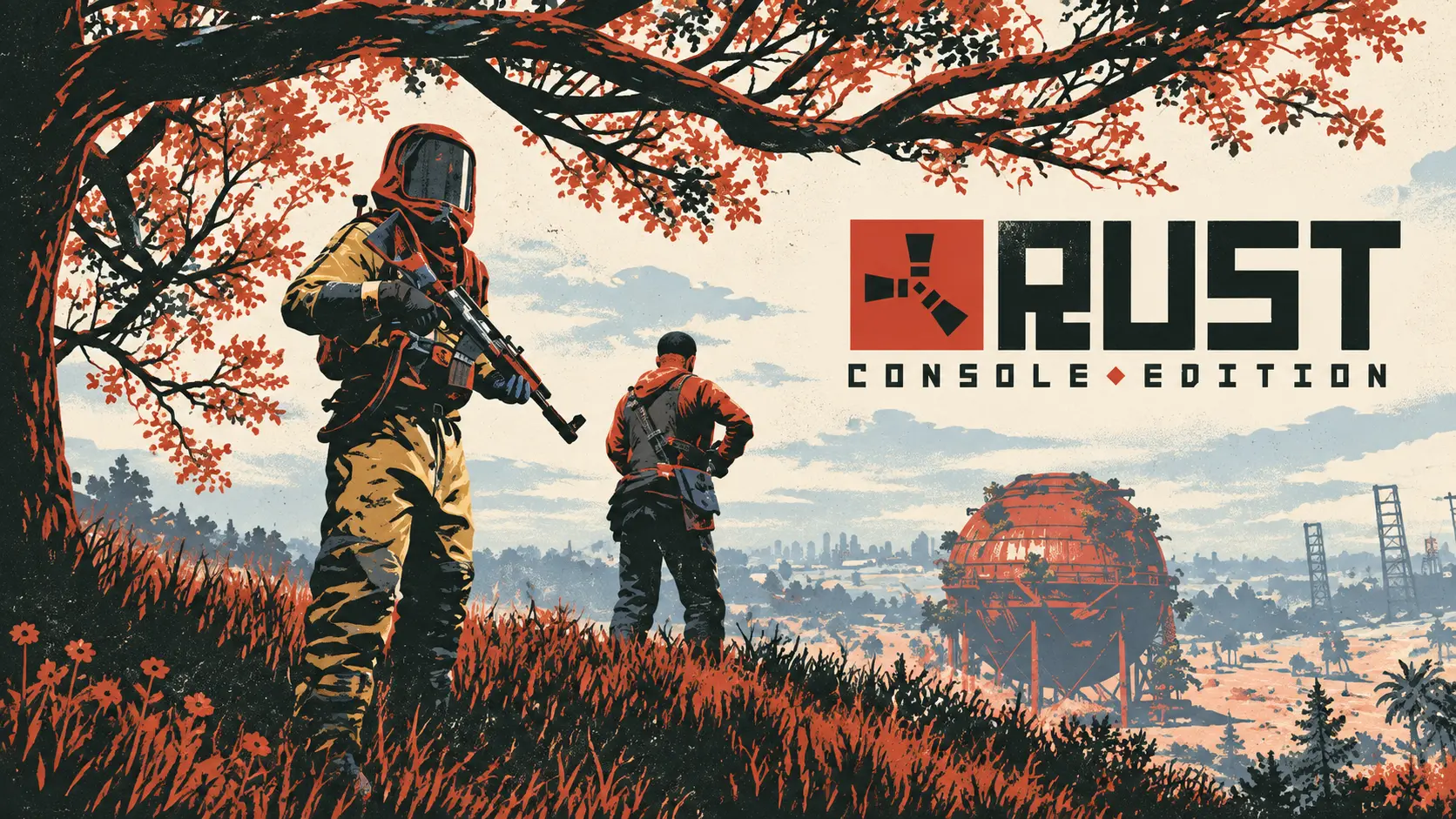
That similarity probably explains a lot about the questions appearing under Facepunch posts.
A Console player can spend hundreds of hours looking at something that appears to be the same Rust everyone else is playing.
Underneath, it isn’t.
The Clone That Wants to Stay a Clone
There is a funny historical reversal here.
Garry Newman once described Rust’s beginning very plainly:
“Rust started off as a DayZ clone.”
Facepunch then spent the following months moving away from that origin. Zombies disappeared, Rust was rebooted, and the game’s own building, progression, monuments and systems gradually created an identity that no longer needed DayZ to explain it.
Double Eleven inherited almost the opposite challenge.
Rust Console Edition entered public life in May 2021 as a version whose success depended largely on remaining recognisably Rust.
Console players expect it to keep growing toward the complexity of the PC game. Every substantial system Double Eleven reproduces reinforces the idea that this remains Rust, simply evolving on another timeline.
The survival genre already has plenty of Rust-like alternatives.
The name on this one is Rust.
Facepunch started with a clone and worked toward becoming something else.
Double Eleven started with Rust and has spent five years working very hard to keep it Rust.
Here, that’s dedication.
A Completely Different Beast
That visible similarity makes the engineering story underneath Console Edition particularly strange.
Double Eleven first discussed a console version with Facepunch in 2016. When development began, the team selected a point in Facepunch’s codebase that it considered safe enough to become the foundation of its own version.
Then it started rebuilding.
The original console targets imposed severe memory and CPU restrictions. Double Eleven says lighter optimisation would never have been enough, so its engineers had to rip apart and rewrite major engine subsystems within Unity.
At one stage, their procedural world could take around 45 minutes to load. They replaced the loading architecture and reduced that dramatically.
Double Eleven eventually described the result rather well: Rust remained familiar to players while becoming a completely different beast underneath.
The studio had already concluded that PC and Console would have to live in separate universes.
That gives us an odd result.
Double Eleven changed enormous amounts of Rust specifically so that the player wouldn’t have to notice enormous amounts of change.
A Train Is a Train
The railway gives us a very convenient example because Console just received another major piece of it.
Facepunch released Rust’s underground transit system in March 2021. The update put a procedural rail network beneath the island, with entrances around monuments, drivable Workcarts and Tunnel Dwellers.
That wasn’t the end of Facepunch’s railway development.
The system continued expanding through surface rail, additional rolling stock and other changes. Years later, Facepunch connected the surface and underground networks and continued refining the system.
Rust Console Edition received its own Underground Transit System in August 2026, including the underground network, Workcarts, signals and Tunnel Dwellers.
Look only at 2021 → 2026 and the obvious conclusion is that Console got trains five years late.
That’s one clock.
Rust PC had already existed publicly for more than seven years when its underground railway arrived.
Rust Console Edition had existed for a little over five when Double Eleven delivered theirs.
Those dates don’t make one studio faster than the other. Facepunch had to invent the system and determine what Rust would become; Double Eleven already knew the destination.
But knowing where you’re going doesn’t build the road.
Double Eleven still had to make the railway work inside a version of Rust whose world generation, performance constraints, engine systems and development history had been separating from PC for years.
That context matters because Rust itself feels much older than Rust Console Edition.
A Console player sees more than a decade of accumulated PC features and naturally asks why some of them aren’t available yet.
Double Eleven’s own Rust has only been in players’ hands since 2021.
Five years can look very different depending on which clock you started.
And once the railway finally works, Rust Observer goes back to having a much simpler problem.
There’s a train under the island.
Where does it go?
Mobile Starts Somewhere Else
Rust Mobile follows a very different path.
Double Eleven can describe the ancestry of its software quite precisely: it selected a version of Facepunch’s code and progressively rebuilt around it.
Level Infinite describes Mobile from the other direction.
The goal is explicitly mobile-first, with controls, interface, pacing, onboarding, matchmaking and session structure reconsidered for that environment. The team still identifies survival, freedom, risk, creativity and player-generated stories as the foundations that have to remain Rust.
And you can see the difference almost immediately.
A quick look at Welyn trying the closed beta is enough: nobody familiar with Rust needs to be told what game inspired the world in front of him, and Welyn himself wastes very little time before spotting a base and deciding that, naturally, it needs to be raided.
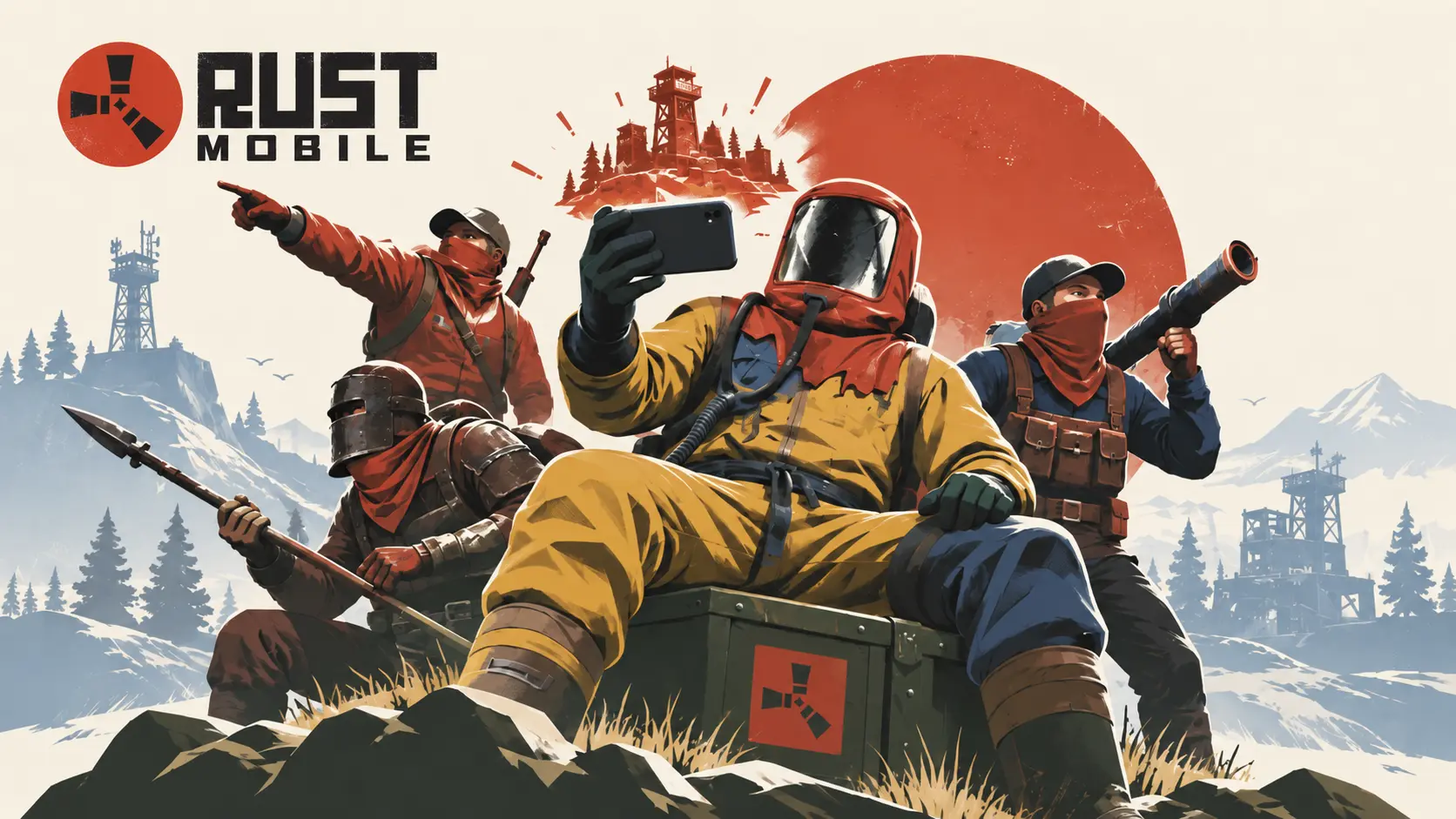
Mobile isn’t simply Rust PC squeezed onto a smaller display.
The interface, menus, controls, terminology, game modes and rhythm of interaction make themselves visible almost everywhere.
The world remains recognisable while the relationship between the player and that world changes.
Console underwent an enormous technical conversion to preserve an experience that can look almost indistinguishable from PC.
Mobile preserves the identity of Rust while allowing the experience surrounding it to become visibly different.
Those are two very different ways to translate the same game.
Same Name, Separate Islands
The three versions also don’t form one multiplayer population.
Console Edition has its own ecosystem, including cross-play between Xbox and PlayStation, but its players don’t simply join PC servers.
Mobile is another game ecosystem again.
That separation is much more interesting to us than the processor inside someone’s machine because it changes something inside Rust:
who can actually inhabit the island together.
PC, Console and Mobile may increasingly share weapons, monuments, buildings and ideas.
Their players still live in different worlds.
Why We Don’t Review Them
There is also a practical reason you won’t find a detailed Rust Console Edition Review or Rust Mobile Review here.
I don’t play them.
I follow communities around both, which is useful for seeing what their players are talking about. Much of that conversation concerns crashes, controller problems, performance, phone compatibility and glitches tied to a particular platform.
Those can be perfectly legitimate problems.
They’re simply outside what Rust Observer usually watches.
A different monument interests us.
Different world generation interests us.
A mechanic behaving differently interests us.
A different server culture could become extremely interesting.
A device struggling to draw the thing correctly belongs mostly to another conversation.
Reading complaints also isn’t equivalent to testing a game yourself.
At some point, experienced Console or Mobile players may be willing to show us around their worlds. I’d be very interested in seeing what someone with thousands of hours considers completely normal there and what would make a PC player immediately stop and stare.
That wouldn’t be a hardware review.
It would be field observation.
We Didn’t Forget Them
So yes.
Rust exists on PC.
Rust Console Edition has been living on its own islands since 2021.
Rust Mobile is creating another one.
They carry the same name because each is supposed to remain recognisably Rust.
The route each development team takes to get there can be radically different.
Double Eleven started with Rust’s software and has spent years converting more and more of its machinery while keeping the visible result remarkably close to the original.
Level Infinite is building an independent mobile game around the identity and experience of Rust, with much more freedom to change how the player reaches that world.
Facepunch remains where both stories started.
Most of the time, those differences can stay underneath the floorboards.
When they change something we can actually see, build, explore or experience inside Rust, they become our business.
A lighthouse is still a lighthouse.
A train is still a train.
And a naked man seeing somebody else’s base and immediately deciding to raid it appears to survive every translation remarkably well.
The island is what matters.
The screen is just how we got there.
Elsewhere
Rust Observer isn’t going to become the place for daily Console patch notes or Mobile compatibility reports.
Other people already watch those versions much more closely.
For Rust Console Edition, Double Eleven’s official news and development posts remain the primary source, while sites dedicated to Console servers and players follow that ecosystem from the outside.
For Rust Mobile, the official Rust Mobile channels and Facepunch document the project itself, while outlets such as Pocket Gamer and GamingOnPhone have followed its testing, development and evolution.
They watch those islands.
For now, we’ll keep watching ours.
References
Garry Newman — The Story of Rust
Background on Rust’s early identity as a “DayZ clone” and its rapid move away from that origin.
https://garry.net/posts/the-story-of-rust
Facepunch — 10 Years of Rust
General Rust timeline, including the game’s early public history and major milestones.
https://rust.facepunch.com/rust10
Facepunch — Freight Transit Line — March 4, 2021
Introduction of Rust’s underground railway network, Workcarts and Tunnel Dwellers on PC.
https://rust.facepunch.com/news/freight-transit-line
Facepunch — Coupling The Rails — November 2, 2023
Connection of the surface and underground rail networks, including functioning underground signals.
https://rust.facepunch.com/news/coupling-the-rails
Double Eleven — What Is Rust Console Edition?
Key background on Console Edition: its codebase origin, large-scale Unity rewrites, hardware constraints, separate roadmap, “separate universes” and the “completely different beast” description.
https://rust.double11.com/news/what-is-rust-console-edition
Double Eleven — Update 1.15 — August 27, 2026
Introduction of the Underground Transit System to Rust Console Edition.
https://rust.double11.com/news/update-115
Facepunch Support — Rust Console Edition Support
Facepunch’s support position: Rust Console Edition is developed and supported separately through Double Eleven.
https://support.facepunchstudios.com/hc/en-us/articles/360018493538-Rust-Console-Edition-Support
Facepunch — Rust Mobile
Official background on Rust Mobile, its development partnership and the goal of preserving the Rust survival experience on handheld devices.
https://facepunch.com/rustmobile
Pocket Gamer — Rust Mobile Interview
Background on Rust Mobile’s mobile-first design, controls, interface, pacing, onboarding and overall development approach.
https://www.pocketgamer.com/rust-mobile/interview-edwin-zheng-marketing-lead/
Rust Mobile — Official Site
Official news, testing information and current development updates for Rust Mobile.
https://www.rustmobile.com/en/
Welyn — I Tried Rust Mobile…
Gameplay example referenced in the article for observing the Mobile version in actual play.
https://www.youtube.com/watch?v=83fz_GMihbg
Three Workshops
Facepunch Studios — Birmingham, UK
Official Facepunch location information.
https://facepunch.com/
Double Eleven — Middlesbrough, UK
Official Double Eleven studio and company information.
https://double11.com/
Level Infinite — Singapore / Amsterdam
Official Level Infinite company information and global studio presence.
https://www.levelinfinite.com/
Further Reading
Rust Console Edition — Official News
Devblogs, patches, roadmaps and announcements from Double Eleven.
https://rust.double11.com/news
RustConsoleServers — Blog
Community-focused coverage of Rust Console Edition and its server ecosystem.
https://rustconsoleservers.com/blog
Pocket Gamer — Rust Mobile
Dedicated Rust Mobile coverage, including news, previews and interviews.
https://www.pocketgamer.com/rust-mobile/
GamingOnPhone — Rust Mobile Archive
Ongoing coverage of Rust Mobile testing and development.
https://gamingonphone.com/tag/rust-mobile/