The Living Island
Explore how Rust manages wildlife and NPCs through population, spawn, dormancy, senses, reasoning, navigation and emerging livestock AI.
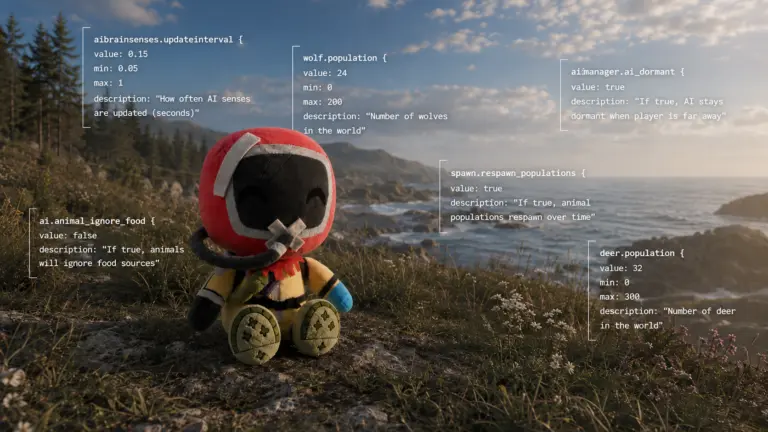
Explore how Rust manages wildlife and NPCs through population, spawn, dormancy, senses, reasoning, navigation and emerging livestock AI.
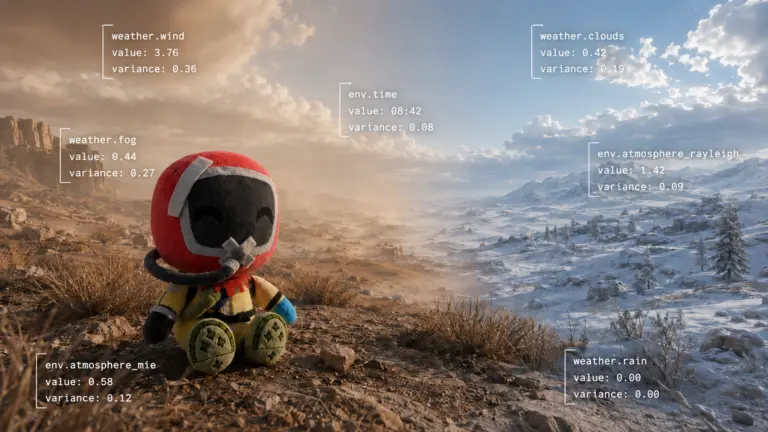
Explore Rust weather and environment controls, from fog and wind to Rayleigh, Mie and biome-specific atmosphere through Commands and ConVars.
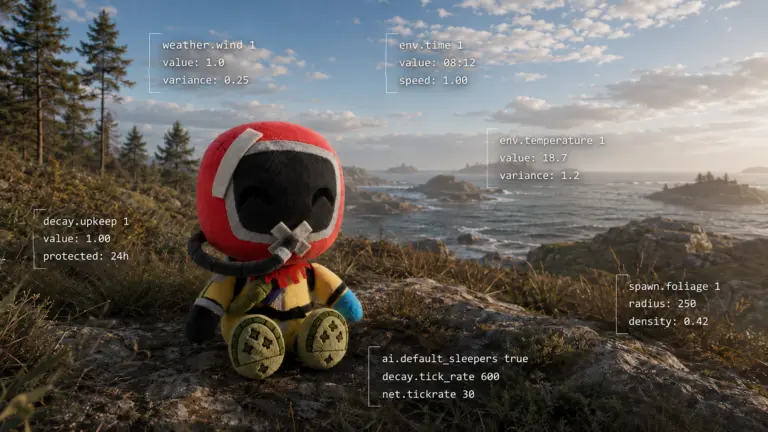
Learn how Rust Commands, ConVars, namespaces, defaults and value ranges expose the control surface behind the island and its server systems.
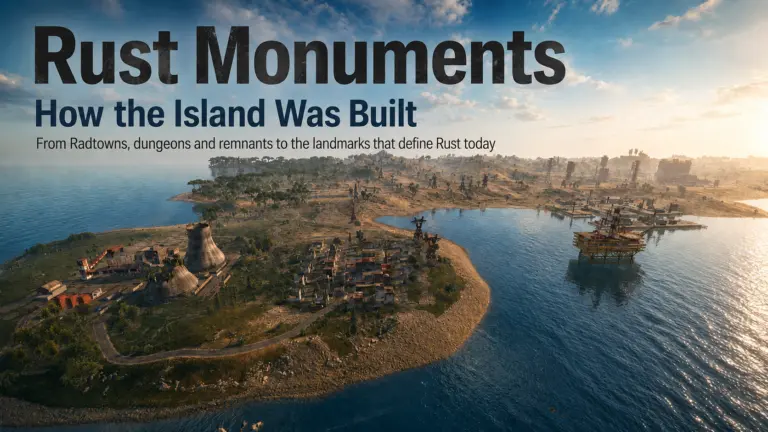
Rust’s Monuments were not created as a finished catalogue. From early Radtowns and experimental landmarks to huge industrial complexes, offshore structures and connected infrastructure, this is the history of how the island was gradually built.
Rust once tried to avoid wipes. Today, players schedule around them, servers build identities around them, and Facepunch has even given the final hours of a wipe their own gameplay. This is how a technical problem became part of Rust’s culture.
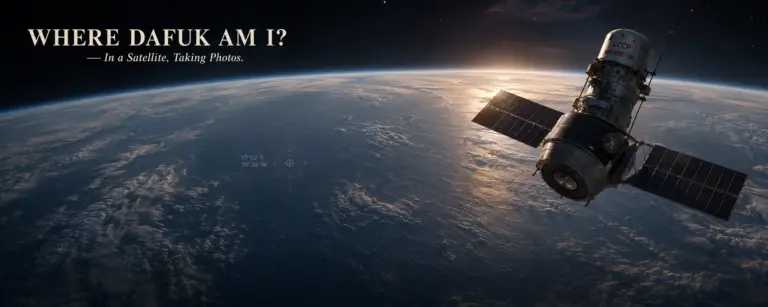
We found the coordinates. Then, on 26 April 1983, a Soviet photographic reconnaissance satellite launched from Baikonur. For the final WHERE DAFUK AM I? article, we borrow its point of view and look back at the South Atlantic—and at the world that existed below us that Tuesday.
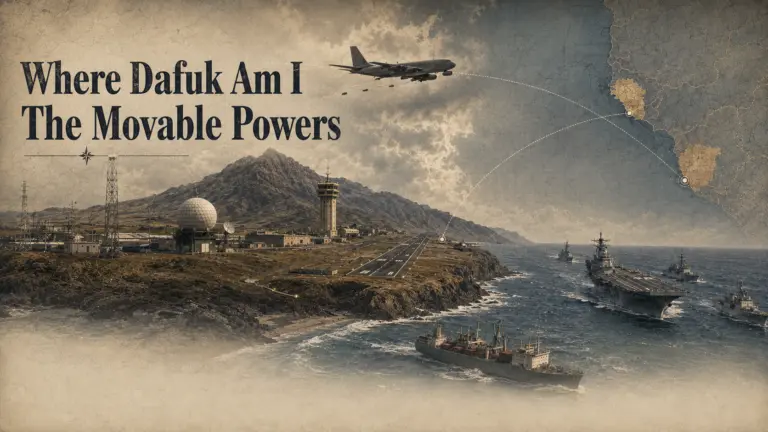
On 26 April 1983, the South Atlantic map looked stable. The power moving across it was not. From Ascension and Conakry to Angola, Haiti and the Falklands, sovereignty, access, force, culture and communication rarely belonged to the same actor.
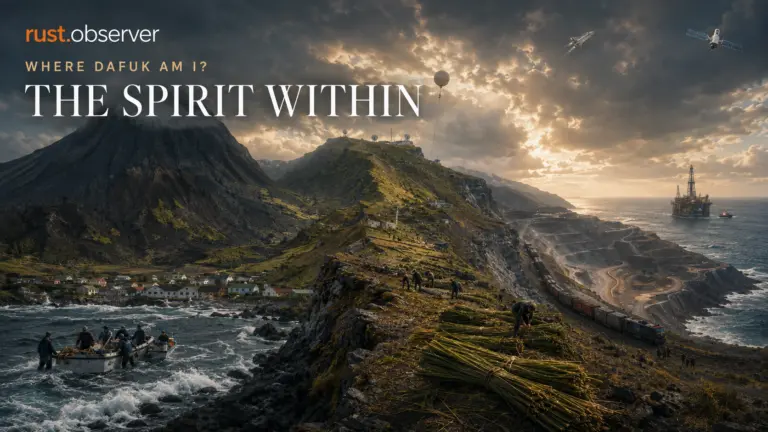
From Tristan da Cunha to Saint Helena, Ascension, Brazil, Angola and Gough Island, the South Atlantic of 1983 was anything but empty. Behind every remote dot on the map were people, industries, instruments — and reasons to stay.
Long before Rust Island appeared, maps and stories were already crowded with Atlantis, Hy-Brasil, Saint Brendan, Tsalal, dinosaurs, cursed treasure and islands that were considerably easier to describe than to find.
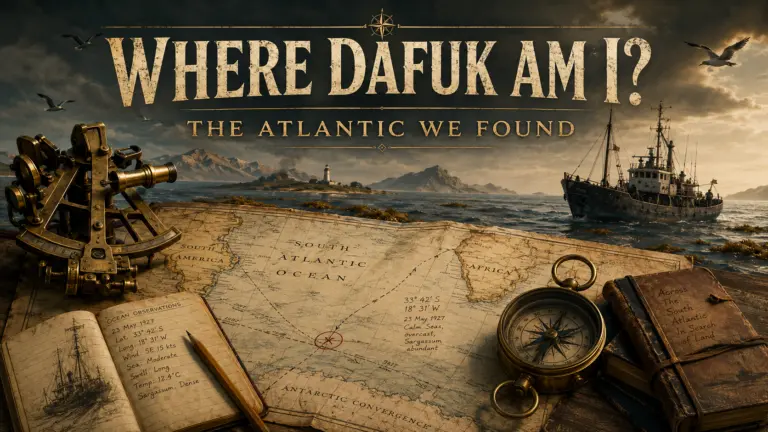
The Atlantic did not need fiction to become strange. Floating seas, phantom islands, unexplained photographs, satellite flashes and Antarctic expeditions supplied more than enough material on their own.