

Baby Wipes
How Rust Learned to Start Over
Every Rust player knows what a wipe is.
The server disappears. Your base is gone. The roads have changed. The neighbours who spent three weeks turning a hillside into a concrete fortress are suddenly standing naked on a beach with a rock again.
Today, nobody finds this particularly strange.
Players search for servers according to when they wiped. Communities advertise weekly, biweekly or monthly. Some servers wipe every few days because their players specifically want to repeat the chaos of Day One. Streamers schedule broadcasts around fresh wipes. YouTubers open videos with some variation of:
“The server wiped five minutes ago. I just joined a high-pop. Let’s see what happens.”
Rust even changes when the wipe is approaching.
That makes it easy to forget something.
Facepunch originally wanted fewer wipes.
When a Wipe Was a Problem
In the early years of Experimental Rust, a wipe was not yet something to celebrate.
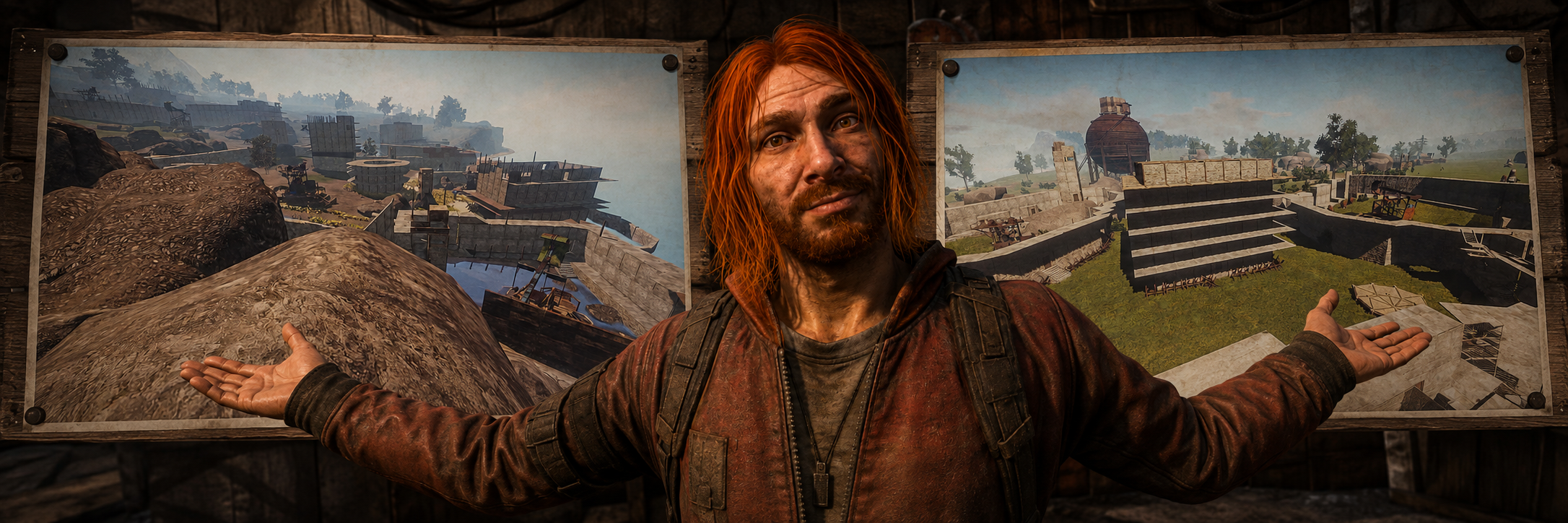
It was often evidence that development had changed something deeply enough that the existing world could no longer continue normally.
By Devblog 36, on November 29, 2014, Facepunch was working on server stability and long uptimes, with the stated ambition of keeping servers running wipe-free for months.
That made sense.
Rust is a game where players invest time into things that remain in the world when they disconnect. A small house may represent hours of gathering and construction. A larger compound may represent the coordinated work of several people over days.
Destroying all of that because the developers had changed part of the system was not harmless maintenance.
It erased player work.
Early Rust was also extremely close to its own development process. Terrain, networking, building, loot and persistence systems were still changing while people were actively living inside them.
Facepunch gradually began separating those things.
In January 2015, Devblog 43, blueprint progression could survive a map wipe.
That distinction would become fundamental.
A wipe did not have to mean everything was gone.
A month later, Facepunch even moved its regular update day to Thursday. Devblog 48 explains that the change gave the team time to patch problems before the weekend and made wipes less disruptive.
Then Devblog 50, on March 5, 2015 provided a perfect example of the original problem.
Terrain generation had changed enough that the existing map had to go.
Map wipe required. Blueprints retained.
The developers needed a new world.
They did not necessarily need to erase the player.
There Has Never Been Just One Wipe
This is where the word wipe starts becoming misleading.
A map wipe destroys the current physical world.
A blueprint wipe reaches into player progression.
A restart may do neither.
Those differences became important very early.
On August 6, 2015, Devblog 72, Facepunch described the monthly forced wipe and announced that this particular wipe would also erase stored blueprints for the first time, because of changes to progression and the item system.
That sentence tells us something important.
If blueprints normally disappeared with every monthly wipe, there would have been nothing remarkable about announcing that they were disappearing this time.
Blueprint wipes became the memorable ones.
For long periods on Facepunch Official servers, players could lose the island while keeping what they had learned.
A base was temporary.
A blueprint could cross from one world into the next.
When Devblog 180 introduced Blueprints 3.0 in October 2017, servers and progression were wiped for the transition to the new Workbench-based system.
The distinction remained afterwards. Forced map wipes could happen while learned blueprints survived.
Years later, Facepunch was still announcing blueprint wipes separately. Official servers received one in January 2021, and another major progression wipe followed in December 2021.
That is why old players remember some wipes differently from others.
Some destroyed a month.
Others destroyed an era.
Official Rust and Everybody Else
There is another distinction that matters just as much.
Facepunch Official has its rules. Community servers have theirs.
The forced monthly wipe created a common rhythm for official Rust, but community operators were free to build different experiences around it.
Devblog 118 — Wipe Hype was already making that distinction visible in 2016: Facepunch could define what happened on its own official servers while community operators made their own decisions.
That freedom eventually became part of the server’s identity.
Weekly.
Biweekly.
Monthly.
Every few days.
Some retain progression longer than others. Some reset aggressively. Some exist specifically because their players want another fresh start as soon as the current world has matured.
Two servers can run the same Rust and have entirely different relationships with the wipe.
Once that happened, the wipe stopped being only a Facepunch maintenance problem.
It became something communities could use.
From Accident to Calendar
The transformation happened quickly.

By August 2015, Rust had a monthly wipe framework.
Yet Facepunch was still trying to avoid wipes that were not necessary.
Devblog 75 is particularly revealing. Atmosphere and lighting work was deliberately held back to avoid triggering another wipe.
So there was never a clean moment when Facepunch suddenly decided:
Wipes are good now.
The team accepted a predictable cycle while continuing to avoid unnecessary destruction.
Then, on October 29, 2015, Devblog 84 published a tentative Wipe Schedule, with forced wipes roughly once per month.
The wipe had become a calendar event.
That changes the question completely.
In 2014:
How do we keep the server alive longer so we do not have to wipe it?
By late 2015:
When the wipe comes, what happens next?
A Restart Is Not a Wipe
Players experience wipes and restarts in almost the same way.
A warning appears.
The server disappears.
Everyone gets kicked.
For several minutes, nobody can reconnect.
Then the server comes back.
But that does not mean the computer hosting Rust rebooted.
It is the Rust server that is restarting.
For an administrator, the distinction is obvious.
On a locally hosted server there is a terminal. Commercial hosts provide an equivalent management interface. Modern administration tools expose even more of the process directly.
RustDedicated stops.
RustDedicated starts.
Lines begin scrolling.
The launch script and server configuration determine what comes back: the server settings, administrative options, map configuration and whatever data the operator has chosen to retain, clean or replace.
A wipe can be part of that process.
It is not the process itself.
In a simple ProcGen test we ran for Rust Observer, the launch was visible from beginning to end. The server received its configuration, generated the map, built navigation data, loaded entities, enforced population limits, initialized the server, uploaded the generated map and its image to Facepunch’s backend and connected to Steam.
Nothing invisible needs to be invented.
The player sees a server disappear and return.
The administrator watches it happen.
Regular restarts have also been part of Rust server life for years. Facepunch’s own devblogs show the team repeatedly dealing with systems that behaved differently at startup or after restarts.
In Devblog 94, for example, Facepunch worked on eliminating long building-stability warm-up checks during server startup. By Devblog 99, that stability data could be serialized instead, reducing restart time.
And in Devblog 110, Facepunch was already dealing with gameplay behaviour affected by the frequent restart practices of community servers.
Restarts were not an accident at the edge of Rust.
They had become part of operating it.
The Mini-Wipe Nobody Calls a Wipe
A restart also exposes a smaller kind of reset.
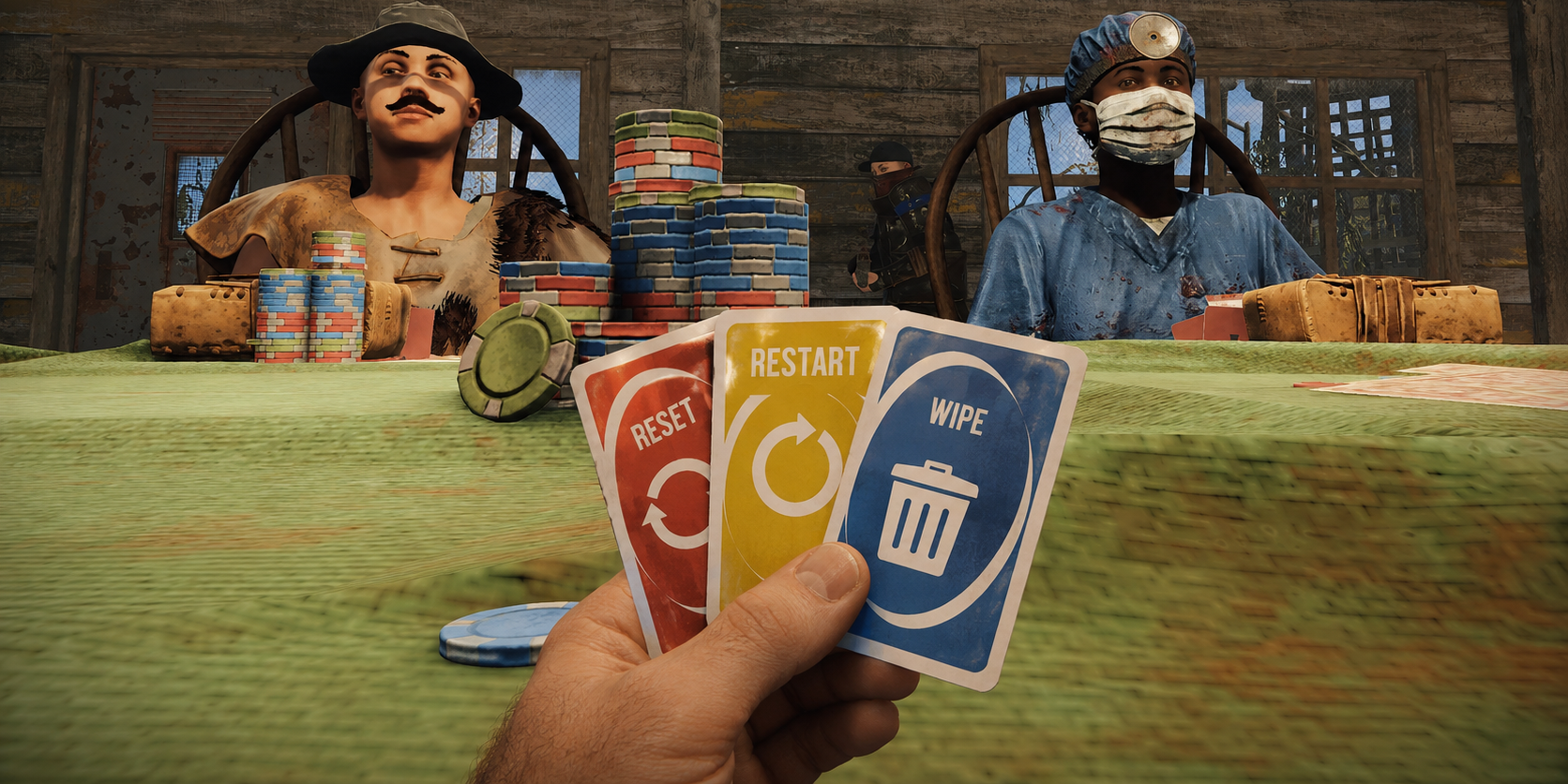
The base can still be there.
Your inventory can still be there.
The map can still be there.
But the island is not necessarily occupied exactly as it was before the restart.
Roadside junkpiles are an obvious example.
When a junkpile has been visited and exhausted, it disappears. Another opportunity eventually enters circulation somewhere else. Very rarely will the exact same roadside location simply receive the same junkpile again immediately.
The principle is old. In Devblog 44, Facepunch was already describing loot containers that disappear when looted and later respawn at random locations.
By Devblog 73, the team was fixing duplicated loot caused by server restarts.
And the effect is still easy to observe.
After a restart, some junkpiles have to return.
Animals that were killed can repopulate.
NPC positions change.
Trees, stumps and resource nodes can be renewed or redistributed.
Dynamic crates and other opportunities begin appearing again.
The road survives.
What lives on it does not necessarily survive with it.
That is why a restart can feel like a tiny wipe even when no meaningful player persistence has been erased.
The Pace Belongs to the Players Too
There is another reason a fresh server does not simply appear completely filled with resources.
Rust’s world has a pace.
And that pace is related to activity.
The administrative configuration exposes this very clearly. Loot population and respawn systems can scale according to server population, while animals, NPCs and other dynamic populations have their own controls.
So a fresh server with hundreds of players does not behave like the same map with twenty people online.
Players begin moving.
Loot is taken.
Animals are disturbed or killed.
Crates are opened.
Roadside opportunities disappear.
New ones enter circulation.
The more activity the server receives, the more frantic that exchange can become.
A high-pop fresh wipe can therefore develop an extremely fast pace.
A quiet server can remain comparatively calm.
And that pace is not fixed for the lifetime of the map.
Imagine a server that wipes Friday evening with hundreds of players. The island is hammered for hours.
Twenty-four hours later, far fewer people are interested.
When the server restarts, everybody is disconnected. Only the players who actually return continue feeding that level of activity. As the population and recent activity fall, the pace of the world can fall with them.
The restart therefore matters here too.
It does not need to erase the map to change how the island feels afterwards.
This is one reason experienced players, streamers and YouTubers do not necessarily begin their fresh-wipe story at the literal first second that the server becomes available.
They often give it five or ten minutes.
Not because the scenery is secretly unfinished.
Because the players have begun putting the world in motion.
A New Map Changes More Than the Scenery
A map wipe can also change the island itself.

This matters, but it does not require a tour through hundreds of ProcGen controls.
A small map and a large map do not produce the same Rust.
Smaller maps compress players and available locations.
Larger maps create distance.
Some small worlds cannot contain every monument. Large worlds can separate important locations by enough distance that movement and logistics become a major part of survival.
That distance changes people too.
A group able to maintain multiple bases, farmers, roamers and defenders can use a large world differently from a solo player who has to cross the same distance alone.
Compact maps force encounters.
Large maps can create territories.
And the need to control that territory can help encourage clans and zergs capable of handling the scale.
ProcGen also does not mean that a seed number completely describes the final world.
The seed provides the starting terrain, but world size and the rest of the generation process determine what the player ultimately receives.
A wipe therefore does not merely delete yesterday’s houses.
It can establish the social geography of tomorrow’s server.
Our local server test showed another visible piece of this process.
Once Rust had generated the new procedural world, it uploaded the resulting .map and its image to Facepunch’s backend.
The island had become a concrete map that could be distributed, indexed and examined by the wider Rust ecosystem.
That machinery deserves its own story.
For Baby Wipes, the important point is simpler:
a wipe can change the conditions under which everyone starts again.
The Community Discovered Day One
Once wipes became predictable, communities discovered something Facepunch had originally been trying to avoid:
starting over is fun.
Not always.
Not for everybody.
But Day One Rust produces conditions that cannot last.
Everyone wants cloth.
Everyone wants stone.
Everyone wants scrap.
Good base locations are still available.
Monuments are contested by people who do not yet have warehouses full of weapons.
A Thompson matters.
A Workbench matters.
A few hundred scrap matters.
The social hierarchy is still liquid.
Nobody has completely won yet.
So some servers deliberately shorten their wipe cycles to reproduce that moment again and again.
A server wiping every few days is not necessarily suffering from excessive resets.
The reset may be the entire reason it exists.
One operator may do it because that is the challenge he enjoys.
Another does it because visitors want weekly fresh wipes.
Another builds the server around a particular community.
Another wants predictable conditions for producing videos.
Different motivations.
Same tool.
The wipe.
“It Wiped Five Minutes Ago”
Content creators discovered the same thing.

A fresh wipe creates a story automatically.
A YouTuber does not need to manufacture the opening conflict.
Join a freshly wiped high-pop server and the ingredients already exist:
hundreds of players starting with almost nothing, everyone looking for the same resources, bases appearing everywhere, monuments being contested and alliances forming while territory is still undefined.
The wipe writes Act One.
That is why an opening like this has become almost a genre:
“The server wiped five minutes ago.”
Some major Rust creators also operate, or have operated, their own server networks.
Those environments can be configured around the kind of experience their visitors want, the challenge of fresh wipe, or the conditions under which a creator can repeatedly find interesting stories.
That does not require scripting encounters.
It means creating a world where encounters are likely to happen.
Facepunch made the wipe predictable.
The community gave it uses.
Content creators turned the opening hours into a media event.
And outside the game, services such as Just-Wiped and RustMaps turned the freshness of a world into searchable information.
Players no longer search only for a Rust server.
They can search for a world of a particular age.
Before the Wipe
The event begins before the server disappears.
On the first Thursday, players follow update streams and community coverage while everyone waits for the changeover.
Corrosion Hour and other Rust streamers regularly put viewers directly into that transition, looking at what is happening before the wipe and what changes when the servers return.
Other players use the remaining hours more practically.
If blueprints are going to survive the next map wipe, an abandoned base can still contain something valuable.
Scrap.
Components.
Anything that can be converted into knowledge before the deadline.
A grub who finds enough scrap in a dying base may learn one final blueprint that will still matter after every building on the island is gone.
That creates a strange economy.
At the end of a wipe, physical wealth is rapidly losing value.
Persistent knowledge is not.
So the final hours become a liquidation period.
Use it.
Give it away.
Raid with it.
Research it.
Because tomorrow the box will not exist.
Rust Has a Last Day
Day One gets most of the attention.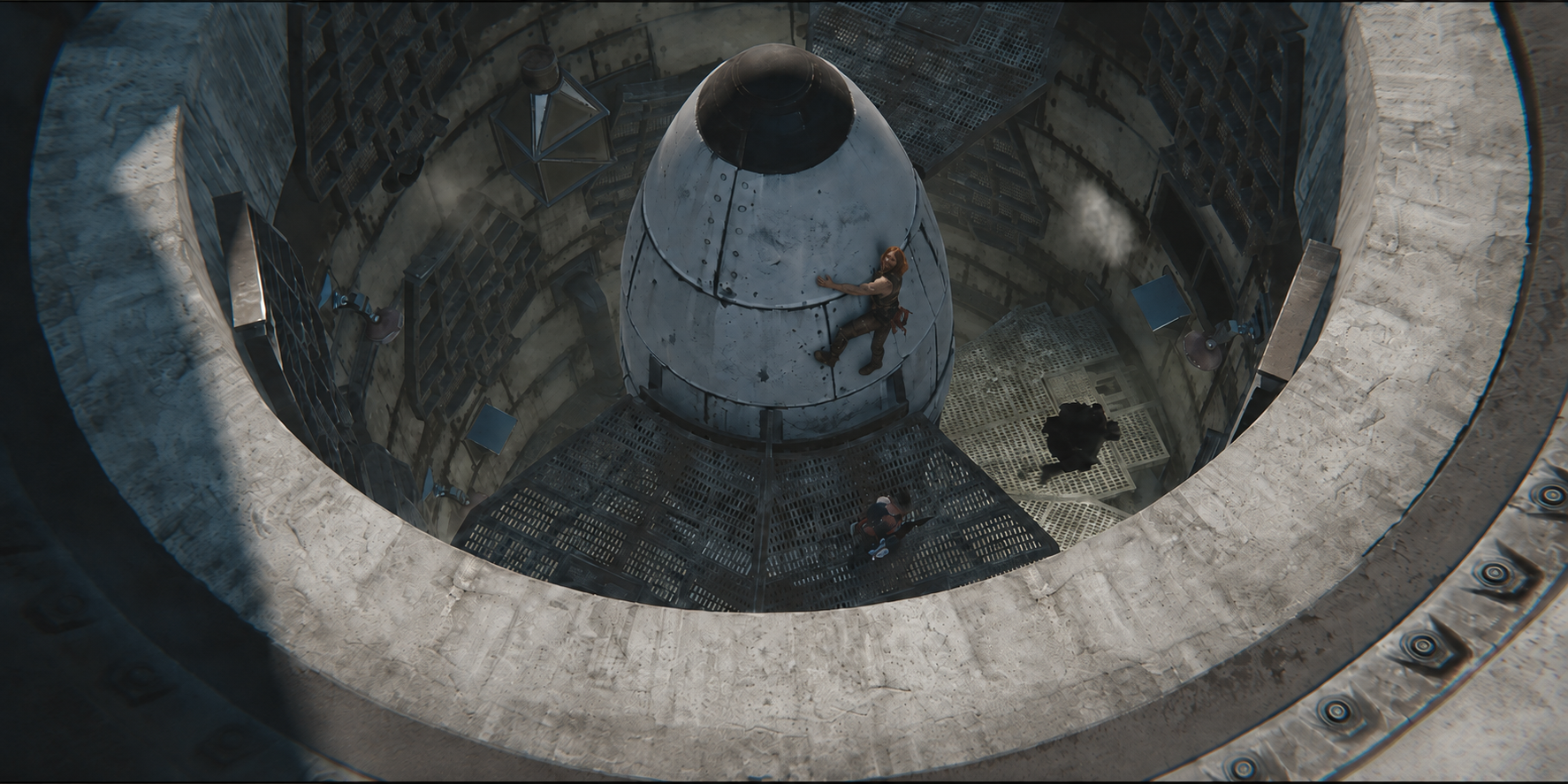
But modern Rust also has a Last Day.
And Facepunch eventually made that last day part of the game.
In R.U.S.T., May 4, 2023, the Nuclear Missile Silo arrived with a countdown tied directly to the wipe cycle.
The accompanying Wipe Event increased military and NPC activity as the countdown approached its conclusion.
And these are not twenty-four accelerated Rust hours.
They are the final 24 hours in real life.
The change is visible.
The deeper Silo event becomes available.
Scientists become a greater problem.
Bradleys are no longer simply something players associate with Launch Site; road patrols can put them directly into the island’s traffic.
Military activity rises.
The Patrol Helicopter becomes another part of an increasingly hostile environment.
For a solo, the balance of danger changes.
At fresh wipe, the obvious threat is often social.
Groups.
Clans.
Players racing ahead of you.
By the final day, much of that hierarchy has already been established.
But now the PvE itself rises another step.
For some clans, that is precisely the attraction.
The final twenty-four hours become the moment to challenge the Silo, hunt road Bradleys, spend accumulated weapons and attack parts of the game that become particularly relevant only when the world is already condemned.
The Silo is the clearest expression of what happened to the wipe.
Earlier in the cycle, much of the deeper event remains inaccessible.
Then the last day arrives.
The facility opens.
The military presence is there.
The countdown is running.
The mission itself makes the intention clear: players can interfere, fight their way through the installation and challenge the forces protecting it.
But they cannot stop what the clock represents.
The wipe is coming.
This is an extraordinary distance from Rust’s early development.
Facepunch once worked to avoid wipes because they destroyed player work.
Years later, Facepunch built a monument and mission around the final hours before the world is deliberately destroyed.
The wipe was no longer outside the game.
Rust had given it an ending.
Wipes Became a Way to Remember Rust
There is another effect that becomes obvious after enough years.
Rust players often remember time in wipes.
Not only:
“That happened in 2017.”
But:
“That was the wipe when Blueprints 3.0 arrived.”
“That was before the blueprint wipe.”
“That was the wipe with that base.”
A wipe divides the history of a server into chapters.
The map provides the place.
The wipe provides the period.
That is especially visible on community servers, where groups may return for dozens of consecutive worlds and remember each one by what happened before everything disappeared.
The wipe does not only destroy history.
It creates units for remembering it.
The First Thursday
Today, the first Thursday of the month is part patch day, part server event and part community ritual.

Players watch streams.
Admins prepare servers.
Communities wait.
Content creators look for fresh populations.
Clans organize.
Solos decide where they are going to disappear.
Then the servers fall.
For a few minutes, Rust is gone.
On the administrator’s side, terminals and hosting interfaces fill with activity.
Then the servers return.
Dynamic populations begin again.
Players begin feeding the pace.
The new cycle starts.
And everyone runs for the same hemp plant.
Facepunch eventually achieved what those early devblogs were trying to achieve.
Development no longer needs to casually destroy everybody’s work every time something changes during the week.
The destructive reset became predictable.
And once it became predictable, players stopped merely tolerating it.
They prepared for it.
Server owners designed around it.
Websites tracked it.
Streamers broadcast it.
YouTubers built stories around it.
Facepunch eventually built gameplay for its final hours.
The wipe began as a technical nuisance.
It became part of Rust’s calendar.
Then part of its culture.
Rust did not get rid of wipes.
Rust grew up around them.
References
- Facepunch — Friday Devblog 26, September 19, 2014. Early dedicated-server automatic update/restart support. https://rust.facepunch.com/news/friday-devblog-26
- Facepunch — Devblog 44, January 23, 2015. Loot containers disappearing when looted and returning at random locations. https://rust.facepunch.com/news/devblog-44
- Facepunch — Devblog 73, August 13, 2015. Fix for duplicated loot after restart. https://rust.facepunch.com/news/devblog-73
- Facepunch — Devblog 94, January 21, 2016; Devblog 99, February 25, 2016. Server-start stability work and elimination of long stability warm-up checks. https://rust.facepunch.com/news/devblog-94 — https://rust.facepunch.com/news/devblog-99
- Facepunch — Devblog 110, May 12, 2016. Historical evidence of regular community-server restart practices affecting gameplay systems. https://rust.facepunch.com/news/devblog-110
- Facepunch — Devblog 184, November 2, 2017, and Devblog 192, January 4, 2018. Examples of forced server/map wipes with learned blueprints retained. https://rust.facepunch.com/news/devblog-184 — https://rust.facepunch.com/news/devblog-192
- Facepunch — January Update, January 7, 2021; December Update, December 2, 2021. Later exceptional blueprint/progression wipes. https://rust.facepunch.com/news/january-update — https://rust.facepunch.com/news/december-update-2021
- Corrosion Hour — Rust Admin Commands. Public reference exposing the large number of server controls, including population, spawn and resource-related configuration. https://www.corrosionhour.com/rust-admin-commands/
- Just-Wiped. Server and wipe-age tracking/search ecosystem. https://just-wiped.net/
- RustMaps. Procedural-map indexing and viewing ecosystem. https://rustmaps.com/
- Rust Observer local ProcGen server test — August 14, 2026. World size 2500 / seed 1983. Observed startup included map generation, population enforcement, entity loading, Facepunch MapCache upload, Steam server connection and Rust+ connectivity testing. Project log retained with the research archive.
Views: 14