Where Dafuk Am I? — In a Satellite, Taking Photos
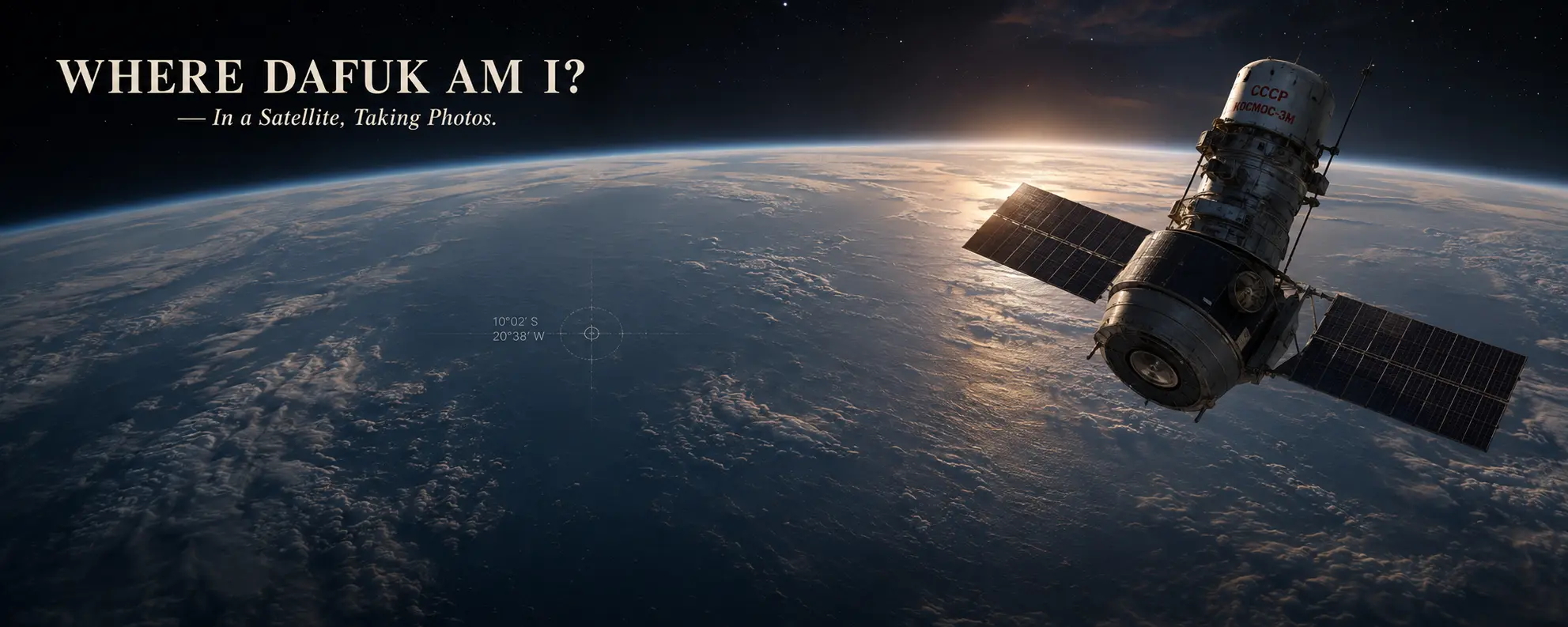
We found the coordinates. Then, on 26 April 1983, a Soviet photographic reconnaissance satellite launched from Baikonur. For the final WHERE DAFUK AM I? article, we borrow its point of view and look back at the South Atlantic—and at the world that existed below us that Tuesday.
You wake up naked on a temperate beach.
Sand under your feet. Ocean beside you. A rock in one hand, a torch in the other.
You have a compass. You have a map.
The compass tells you which way is north. The map tells you where you are on the island.
But the map ends at the shoreline.
Pirate maps usually tell you how to find the island. Rust gives you a very good map once you are already there.
So the question remained:
Where dafuk am I?
Facepunch had given us one more navigation tool.
The sky.
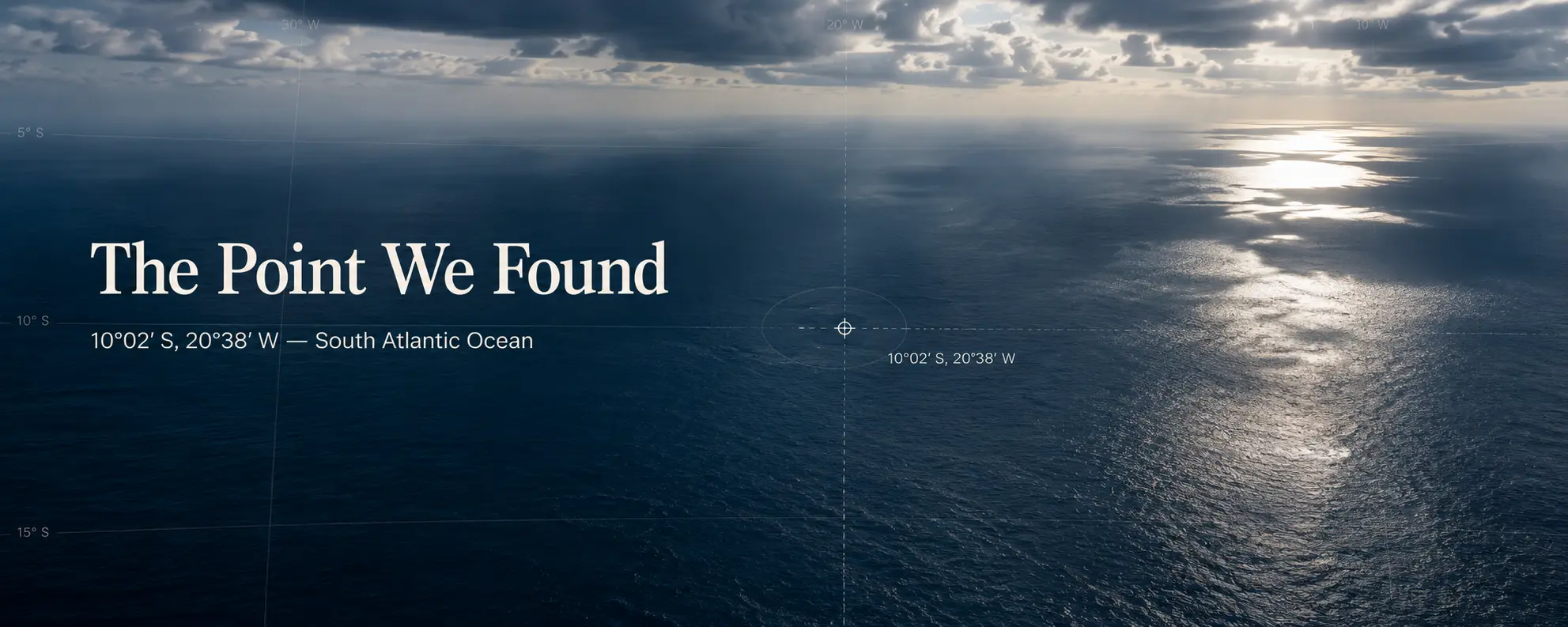
The Point We Found
That was the job of the first article.
We had a date. We had the island clock. We had the Sun, the Moon and the stars. We had observations made across several wipes.
What we did not have was a latitude and longitude printed conveniently in the corner of the screen.
Latitude and longitude had to be approached independently. A constellation could suggest a latitude without telling us where we stood along it. Solar noon could suggest longitude without telling us how far north or south we were.
One clue was not enough.
So we kept comparing.
Known time against solar noon. Known stars against the real sky at the same date and hour. Rough observations against later observations. Things that looked approximately right against things that had to remain right when tested again.
Eventually, the clues stopped behaving like guesses.
They converged at:
10°02′ S, 20°38′ W
Type that into Google.
You will find water.
A lot of it.
That is not a problem with the result.
It is the result.
There is no Rust Island at those coordinates in the real South Atlantic.
There is ocean — and the nearest ground is roughly four kilometres below the surface.
Everything Around Nothing
The next five articles did not continue looking for Rust.
We already had the point.
Instead, we looked at everything around it.
Real islands. Imaginary islands. Currents, weather, shipping routes, deep ocean, isolated rocks, legends, explorers, scientists, fishermen, soldiers, residents, governments, artists and people who happened to pass through.
We found islands where a handful of people maintain weather stations, places controlled from thousands of kilometres away, territories claimed by countries most of their inhabitants will never see, and military or scientific installations that exist almost independently from the people living nearby.
We found stories invented about the Atlantic and stories the Atlantic invented for itself.
We documented the world around the island.
We did not use that world to invent a story for the island.
That distinction matters.
There are enough fragments in those pages to build dozens of What Ifs.
That can come later.
This series had a simpler job.
Find the ground on which we spawn.
Then look around.
Distance Is What Fills It
Looking around the South Atlantic quickly does strange things to your sense of distance.
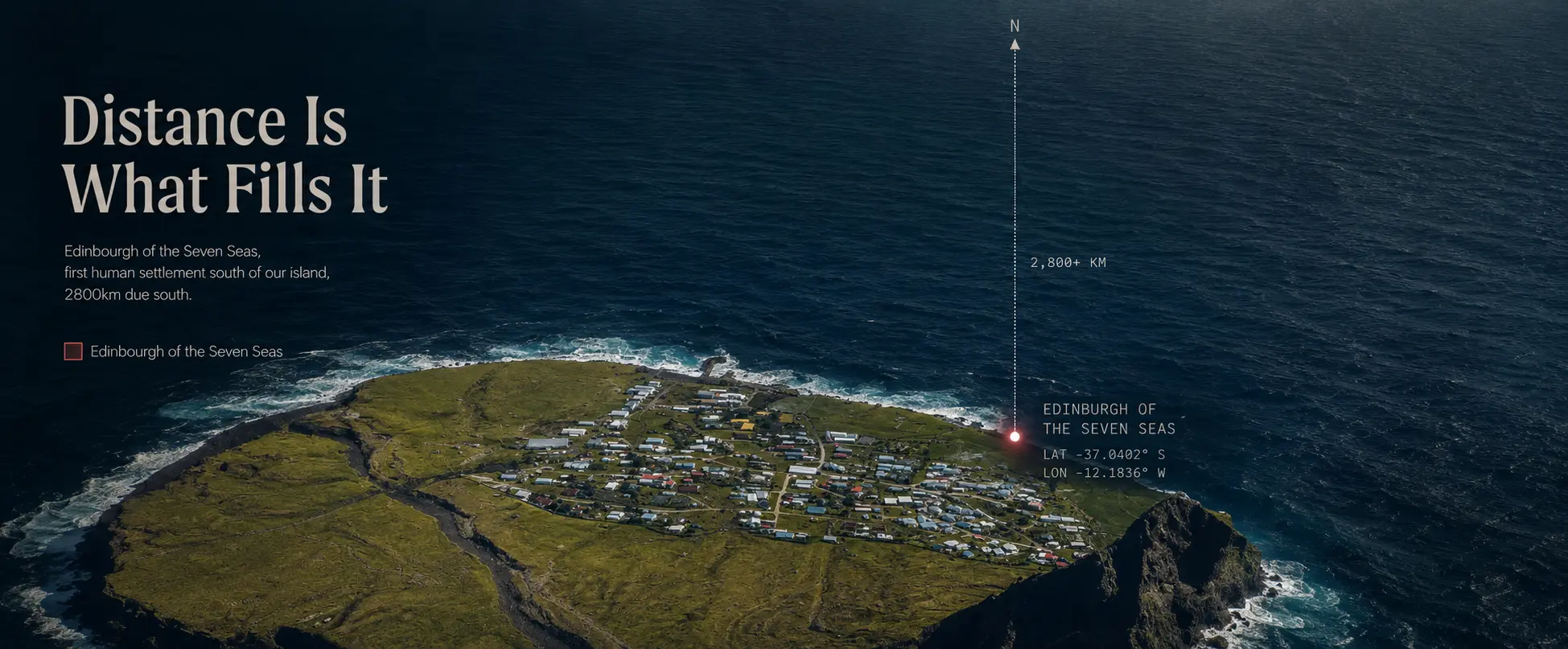
About 1,750 kilometres separates our coordinates from St Helena.
Drive roughly that distance east from Birmingham, where Facepunch makes Rust, and you can cross the Channel, pass through several countries, cities, villages, rivers, languages and road systems before ending up deep into continental Europe, direction Lodz, Poland.
There is almost always something outside the window.
Drive roughly the same distance west from Québec City and you are still in Canada, still moving along essentially the same westbound road corridor through Québec and Ontario.
The towns become interruptions.
Between them: forest, lakes, rock and a great deal of road.
Travel roughly the same distance from our coordinates toward St Helena and the comparison becomes almost ridiculous.
No houses.
No village.
No gas station.
No roadside.
No neighbour walking his dog.
Just ocean.
You wait for something to appear.
Rust compresses that same sensation into only a few kilometres.
You can spend the better part of an hour crossing a map on foot and, unless the route is unusually generous, pass only one or two major monuments.
There are roads.
There are abandoned structures.
There are dozens of roadside junk piles.
But there are almost no houses lining those roads. No villages filling the gaps. No pedestrians walking from one community to another.
The roads connect places.
They do not connect communities.
And the isolation gives us one particularly strange comparison.
Ascension, the nearest real island to our coordinates, is roughly 720 kilometres away.
When we reconstructed one of Kosmos 1457’s closest passes, the satellite came within roughly 500 kilometres of our point.
Not overhead.
Not close enough to give us the dramatic little spacecraft crossing the Rust sky that would have made this article much easier to illustrate.
But close enough for one wonderfully absurd sentence to be true:
For a moment, space was closer than land.
A Camera Pointed at the Earth
Once we had the location, we could finally relate the island clock to the rest of the planet.
The Rust world begins that morning at about 09:00 island time.
Only after locating the island do we get the other clock:
about 10:00 UTC.
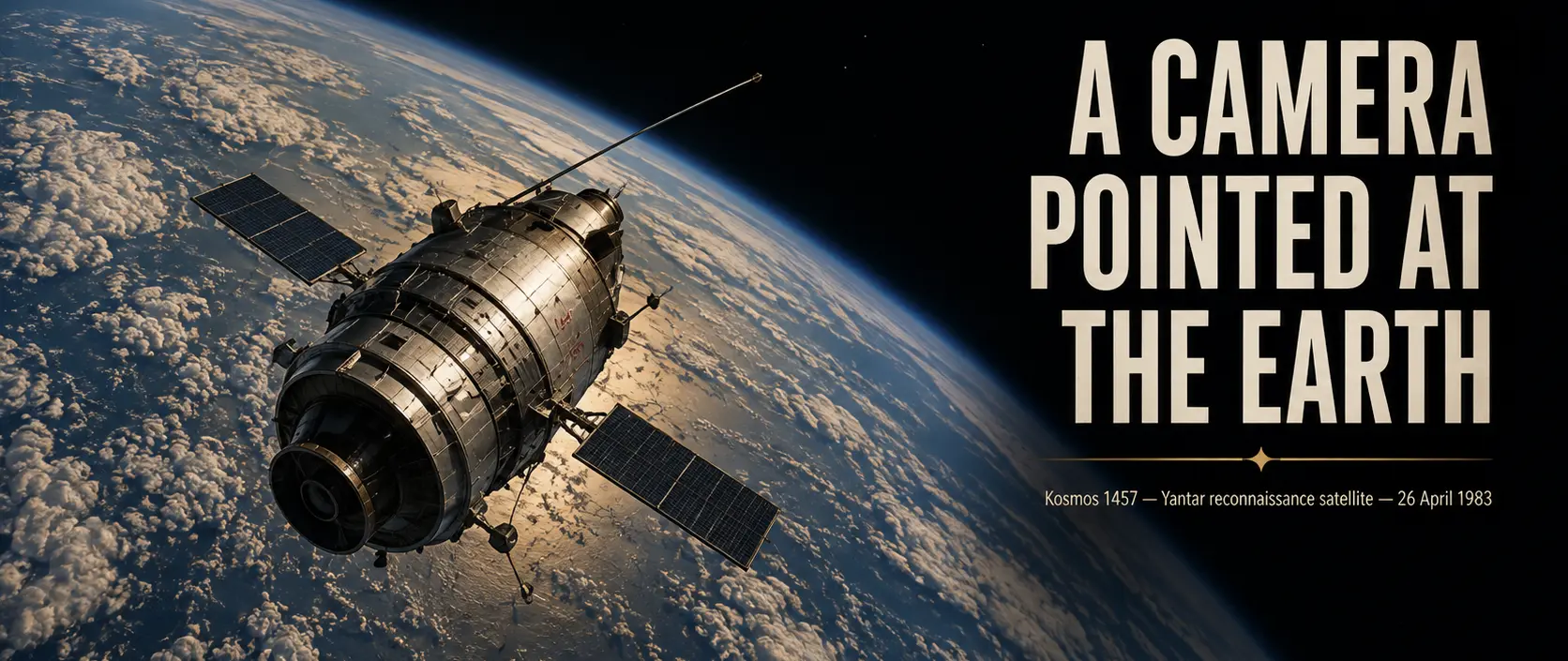
And on 26 April 1983, at 10:00 UTC, the Soviet Union launched Kosmos 1457 from Baikonur.
A Yantar photographic reconnaissance satellite.
Its job was not to stare outward into deep space.
Its camera pointed back toward Earth.
Kosmos 1457 did not park above our coordinates. It entered low Earth orbit and began going around the planet.
A little later, once in orbit, it went to work.
So will we.
Not because we are going to pretend Kosmos photographed Rust Island.
Not because we know every target its cameras saw.
And certainly not because the Soviet Union launched it to make our article more convenient forty-three years later.
We are simply borrowing the point of view.
For six articles, we looked at the world from one very empty piece of the South Atlantic.
From orbit, the frame gets wider.
Below Us, It Was Tuesday
Below us, it was simply Tuesday, 26 April 1983.
This is not a list of everything important that happened in 1983.
And we are not going to reach forward into May, July or December because something later became historically important.
The camera has a date.
What matters is what already belonged to the world that day.
What people could hear.
What they could watch.
What they could buy.
What they could worry about.
What they could joke about.
What they might have talked about with someone standing beside them on a street corner a few minutes before going to the movies.
Some readers will need the dates and references.
Others will recognize the scenery immediately.
We may not remember April 26.
But we remember being there.
What Was Playing
In Britain, Spandau Ballet’s “True” was at the top of the charts.
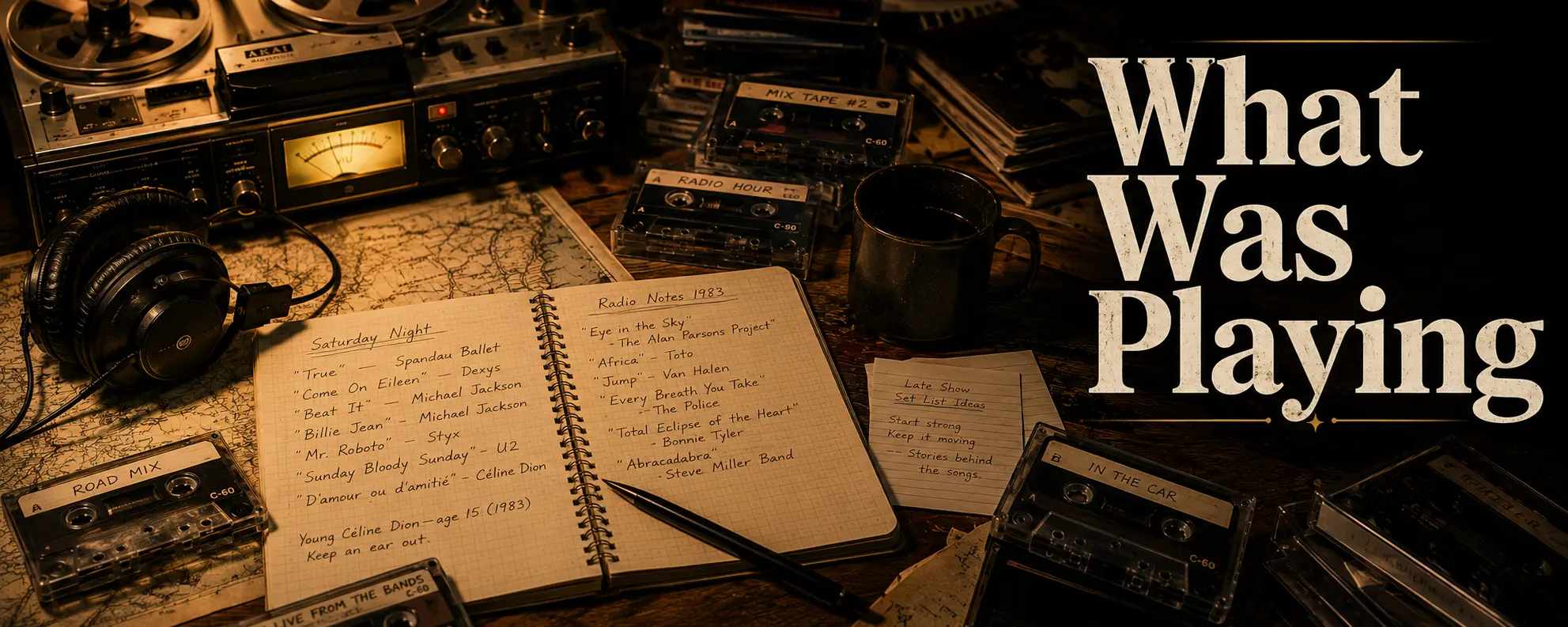
Across the Atlantic, radios were full of “Come On Eileen,” “Beat It,” “Billie Jean,” “Mr. Roboto” and the rest of that unmistakable early-1980s soundtrack.
You did not have to own the record.
You heard it in the car.
In a store.
From somebody else’s radio.
Through a wall.
Music was part of the street.
And some songs carried heavier things with them.
A relatively young Irish band called U2 was beginning to separate itself from the crowd. “Sunday Bloody Sunday” was putting political violence into a song people could hear on the radio.
U2 was not yet the enormous international institution it would become.
It was a band beginning to make people pay attention.
At almost the same time, across the French-speaking world, people were already humming the love songs of a fifteen-year-old Québec singer named Céline Dion.
She was young.
She was not unknown.
Six months earlier, she had performed at Tokyo’s Yamaha World Popular Song Festival before a reported television audience of 115 million.
How far she would go was still unknown.
Although her manager René Angélil certainly had an opinion.
If You Wanted to Go to the Movies
The cinema was just as loud.
Flashdance had opened less than two weeks earlier and was already the movie people were going to see.
48 Hrs. was still playing.
E.T. was somehow still in theatres nearly a year after its release, and by then an outstretched finger was already enough to make people laugh.
Some of the children on that screen were only beginning careers of their own.
Nobody watching them knew which ones would still be famous decades later.
That is what photographs do.
They capture people before history has decided which labels to put under their names.
Dance itself had been everywhere for years.
Saturday Night Fever.
Xanadu.
Fame on television.
Discothèques.
Roller skating.
Music videos.
Clubs packed with people who had spent enough time hearing about wars, missiles and political crises for one day.
There were plenty of places to turn the volume up instead.
Everything was already in place for everybody to keep Staying Alive.
People Still Had Plans for Tonight
The Cold War did not stop anyone from having a Tuesday.
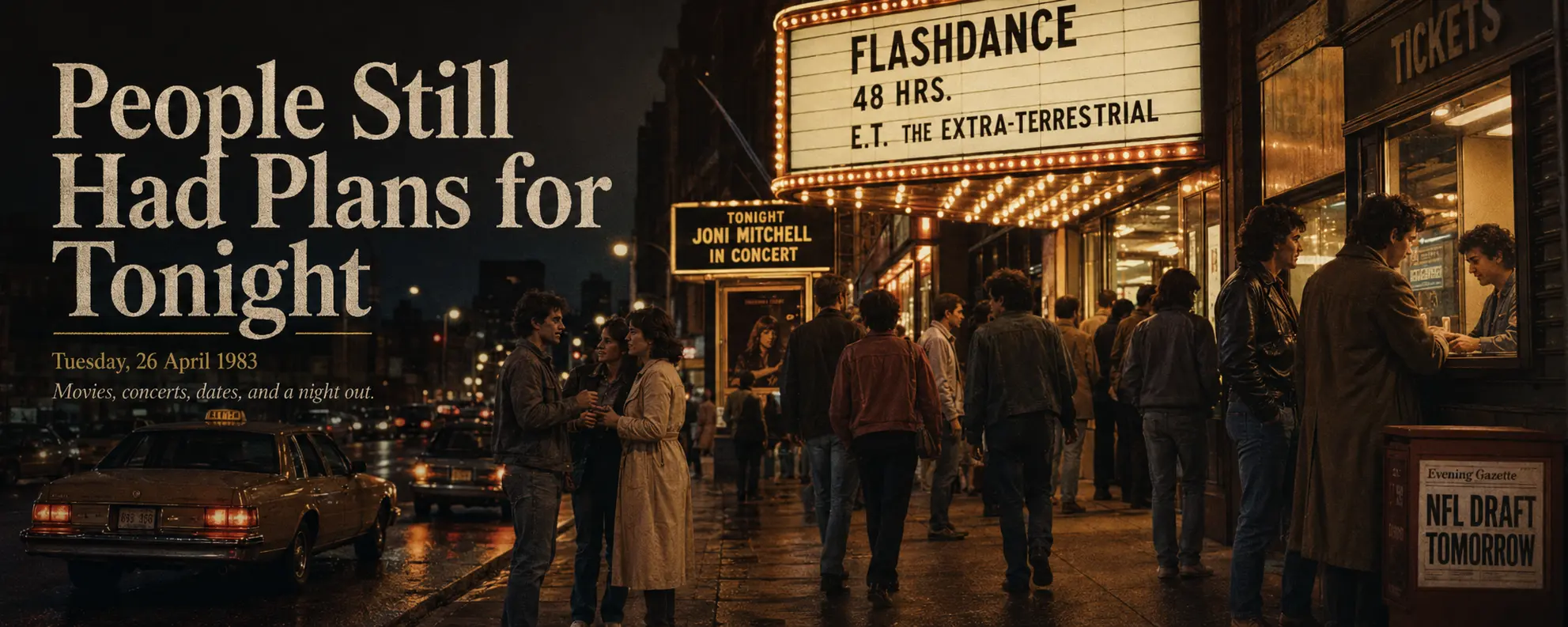
In Philadelphia, the Grateful Dead were playing the Spectrum.
In Brussels, Joni Mitchell was on tour.
That evening, Johnny Carson would sit down with Sammy Davis Jr.
People bought tickets.
People met friends.
People went dancing.
People argued about music.
People decided what movie they wanted to see.
Somebody had a date.
Somebody got stood up.
Somebody had to work.
Somebody did not care what Yuri Andropov was doing because the NFL Draft was on, and a highly regarded Stanford quarterback named John Elway had just been selected first overall.
Elway was already an exceptional prospect.
He was not yet a legend.
That part had not happened.
The Future Was Sitting on a Desk
Elsewhere, the modern world was beginning to become recognizable in quieter ways.
Apple’s Lisa and Apple IIe were only a few months old.
IBM’s new PC/XT had appeared in March.
Most people did not own machines like these.
A lot of people had barely any reason to imagine why they someday would.
But the computers were there.
They could be seen in offices, stores, magazines and demonstrations.
People could argue over whether they were useful, too expensive or simply toys for people with too much money.
And since January, ARPANET had been running on TCP/IP.
Nobody walking along our imaginary street had to know what that meant.
The word Internet did not yet mean what it means to us.
C++ did not quite have its name yet.
GNU had not been announced.
The computer virus was still waiting for its scientific label.
The world did not know what was coming.
It only knew what was already on the desk.
Things People Worried About
Of course, turning the radio up did not make the rest of the planet disappear.
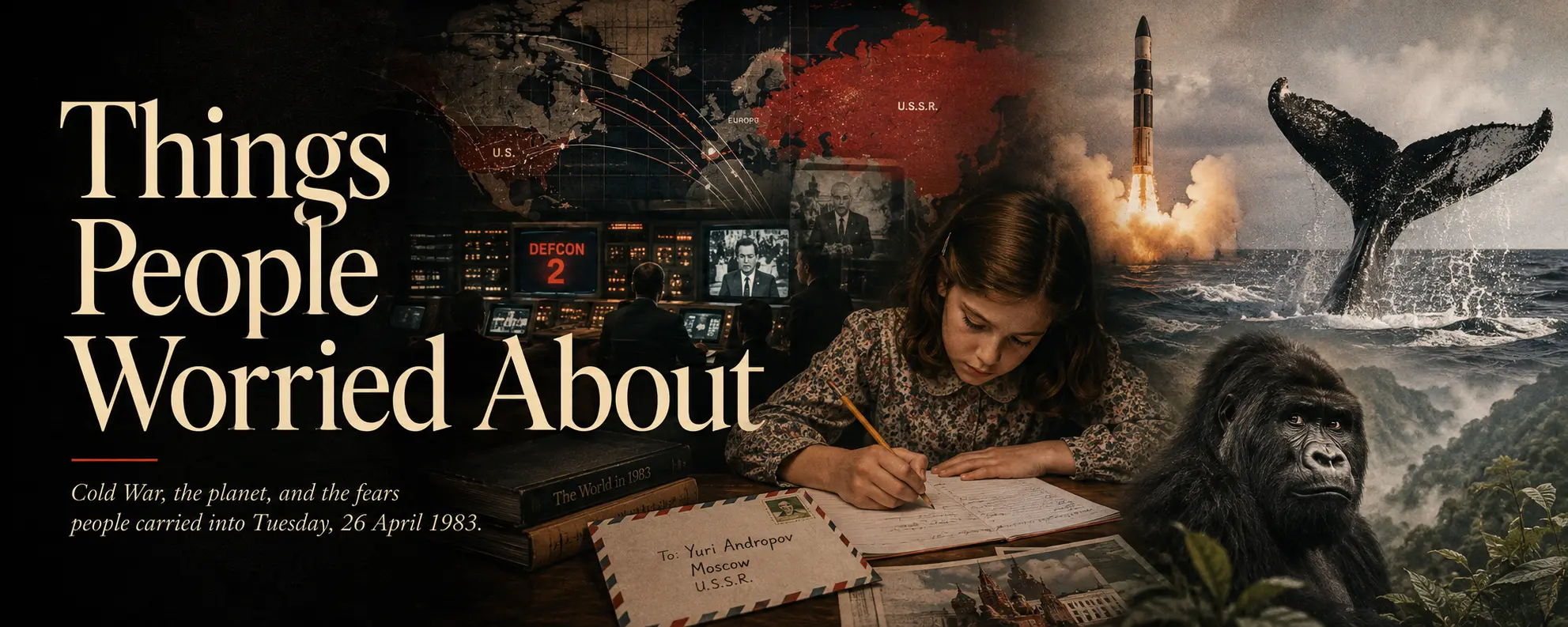
Less than a month earlier, Ronald Reagan had proposed the research programme that would become the Strategic Defense Initiative.
Nuclear war was not an abstract chapter in a history textbook.
It was a legitimate subject for the evening news.
And on this very day, the response of Soviet leader Yuri Andropov to a ten-year-old American girl named Samantha Smith was being made public.
She had written to him because she wanted to know whether the Soviet Union intended to start a nuclear war.
There are more complicated ways to describe the Cold War.
Few are more human.
A child had heard enough adults talking about destroying the planet that she decided to ask one of the men supposedly capable of doing it.
And he wrote back.
But people worried about the planet in other ways too.
Save the whales had already become part of popular environmental culture.
Dian Fossey had made the survival of mountain gorillas a concern recognizable far beyond the mountains where she worked.
One person on our street could be worried about nuclear war.
Another about whales.
Another about gorillas.
Another had True stuck in his head.
Another was wondering whether Flashdance was worth the ticket.
That is what a street looks like.
Human beings standing beside one another with completely different priorities while sharing the same radio station.
A World We Recognize
This is where the seventh article becomes different from the previous six.
Most of the places we visited earlier were obscure.
Tiny islands.
Remote stations.
Forgotten incidents.
People whose names rarely leave specialist books.
From orbit, suddenly, some of the world is familiar.
A song.
A movie poster.
A television host.
An Apple computer.
A young singer.
A young quarterback.
A child writing about nuclear war.
An alien finger everybody thought was funny.
Those who were old enough in 1983 may recognize the atmosphere before they recognize the date.
Younger readers may recognize the names without realizing that, on this particular Tuesday, many of those stories were still unfinished.
That matters.
The fifteen-year-old singer does not have WORLD STAR floating above her head.
The quarterback does not have HALL OF FAME written on his jersey.
The band playing the politically uncomfortable song does not know how many stadiums it will fill.
The kids in the movie do not know which careers will survive childhood.
A photograph does not know the future.
It only knows who was standing there when the shutter opened.
The Earth Keeps Turning
Kosmos did not stay above one street.
It kept moving.
The Earth turned underneath it.
A city disappears.
Another appears.
A coastline.
Mountains.
Roads.
A harbour.
Clouds.
Another country.
Another street filled with people who know nothing about the street we just left.
That is the final freedom the satellite gives us.
For the first six articles, everything had to remain reasonably connected to the South Atlantic.
Not anymore.
Some things happening on 26 April 1983 were simply too far away to belong naturally in those pages.
From orbit, distance stops being the same obstacle.
The camera can keep looking.
But another spacecraft was already taking the opposite approach.
The Longest Zoom-Out
While Kosmos 1457 had just begun pointing a camera back at Earth, Pioneer 10 was travelling farther away from it.
Kosmos went around.
Pioneer kept leaving.
Every day, the world behind Pioneer became a little smaller.
From a street, a human being has a face.
From orbit, a city becomes a shape.
Farther away, countries disappear.
Then continents.
Then the Atlantic itself.
Every island we spent six articles examining eventually becomes too small to matter.
Somewhere inside that shrinking planet is our coordinate.
10°02′ S, 20°38′ W
Somewhere inside that coordinate — at least in Rust — is a beach.
The farther technology can carry our eyes, the harder it becomes to see the humans we started by photographing.
Kosmos gave us a camera pointed at the Earth.
Pioneer 10 gave us the longest zoom-out.
At least until the Klingons got to it.
Back to Earth
Eventually, there is nothing useful left to gain by backing away.
From far enough out, every argument in these seven articles becomes invisible.
The islands.
The borders.
The wars.
The songs.
The people.
The roads.
Even the ocean itself.
Earth becomes one object.
So bring the camera back.
The planet grows.
The Atlantic returns.
The South Atlantic fills the frame.
There is Ascension.
Farther south, St Helena.
And between all those real places, somewhere in an enormous patch of open water:
10°02′ S, 20°38′ W
No real island.
Four kilometres of water above the nearest ground.
Yet around that nonexistent island we found an entire world.
Geography.
History.
People.
Science.
Politics.
Wars.
Music.
Movies.
Rumours.
Ordinary Tuesdays.
For six articles, we kept pointing at pieces of it.
This time, we simply moved far enough away to see how much there was.
Could We Be Wrong?
Of course.
There is no plaque in Rust saying:
WELCOME TO 10°02′ S, 20°38′ W
Facepunch has never confirmed this location.
They have never denied it either.
What we have is something less convenient and, frankly, more interesting.
Observations.
The date.
The island clock.
The Sun.
The stars.
Measurements made again.
And again.
And again.
The clues did not begin as certainties.
They became useful because independent observations kept agreeing with one another.
Could another location explain all of them?
Absolutely.
It just has some work to do.
It has to explain the same date.
The same clock.
The same Sun.
The same stars.
The same observations.
And it has to do that better.
That seems fair.
Yeah. Prove me wrong.
And after all of that — after the satellites, the oceans, the islands, the wars, the music, the movies, the people and nearly a whole planet —
the camera has nowhere else useful to go.
So stop looking.
There is a beach.
A rock.
A torch.
A map that ends at the shoreline.
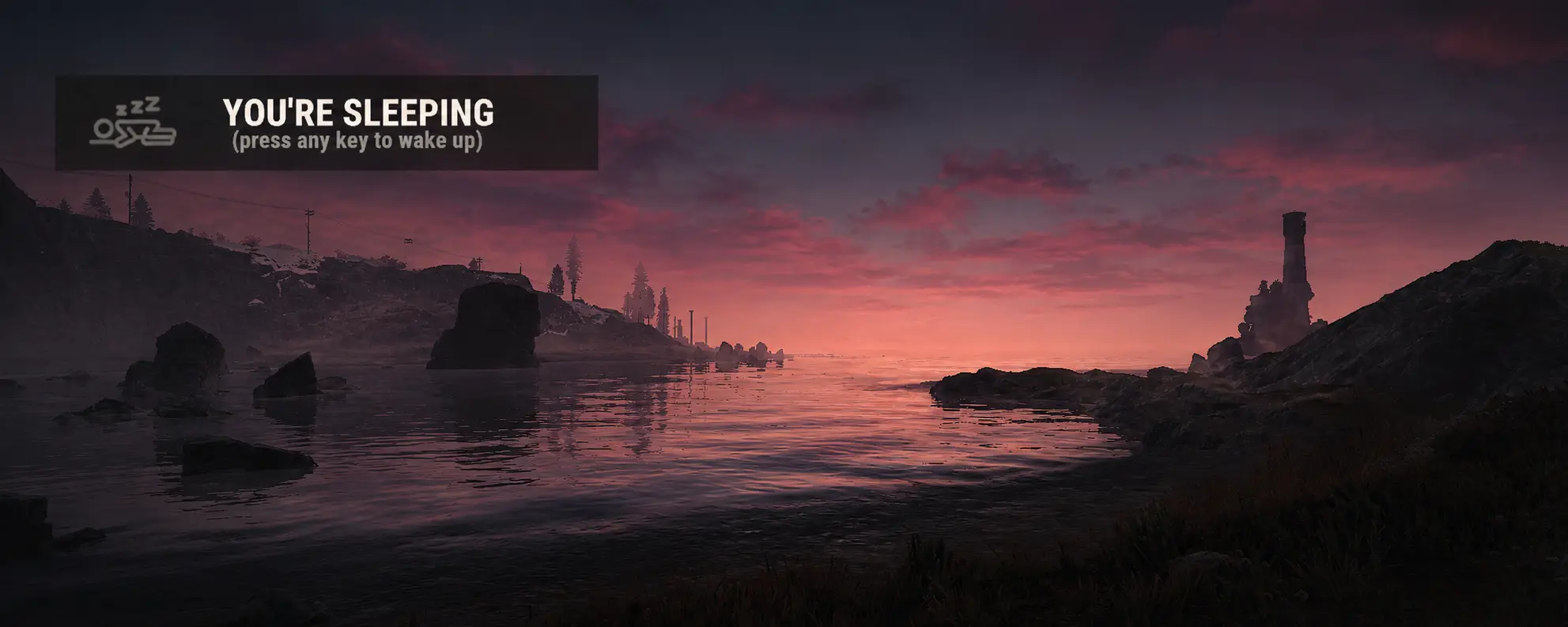
YOU’RE SLEEPING
(press any key to wake up)
References
- Coordinates, bathymetry and Kosmos 1457
- Rust Observer — Where Dafuk Am I? The Astral Connection — Astronomical observations, reconstruction method and the resulting approximate position at 10°02′ S, 20°38′ W.
- GEBCO Bathymetric Compilation Group — Gridded Bathymetry Data — Global bathymetric data used to examine the ocean floor around the reconstructed Rust coordinates.
- Library of the Czech Academy of Sciences — 1983-039A — Kosmos 1457 — Launch at 10:00 UT on 26 April 1983 from Baikonur aboard Soyuz-U; identified as a fourth-generation photographic reconnaissance satellite.
- Gunter’s Space Page — Yantar-4K1 (Oktan, 11F693) — Technical and historical background on the Yantar-4K1 reconnaissance satellite series, including Kosmos 1457.
- Music and popular culture on 26 April 1983
- Official Charts Company — Official Singles Chart, 24–30 April 1983 — Spandau Ballet’s “True” at No. 1 in the United Kingdom.
- Billboard — Billboard Hot 100, 23 April 1983 — Contemporary U.S. chart positions for “Come On Eileen,” “Beat It,” “Mr. Roboto,” “Billie Jean” and other songs heard that week.
- U2 — War — Official discography for U2’s 1983 album, opening with “Sunday Bloody Sunday.”
- CelineDion.com — Biography — Céline Dion’s 1982 appearance at the Yamaha World Popular Song Festival and the reported television audience of 115 million viewers.
- Yamaha Music Foundation — 13th World Popular Song Festival in Tokyo ’82 — Official festival record listing Céline Dion and “Tellement j’ai d’amour pour toi.”
- Movies, concerts, television and sport
- Box Office Mojo — Domestic 1983 Week 16 — April 22–28 — Contemporary theatrical rankings showing Flashdance at No. 1, with 48 Hrs. and E.T. the Extra-Terrestrial still in release.
- Grateful Dead — Grateful Dead Hour No. 1398 — Archive of the Grateful Dead’s 26 April 1983 performance at the Spectrum in Philadelphia.
- Joni Mitchell — 26 April 1983 — Cirque Royal, Brussels — Concert chronology and set list for Mitchell’s Brussels performance that evening.
- IMDb — The Tonight Show Starring Johnny Carson — Episode dated 26 April 1983 — Johnny Carson episode featuring Sammy Davis Jr.
- Pro Football Hall of Fame — 1983 National Football League Draft — Draft held 26–27 April 1983, with Stanford quarterback John Elway selected first overall.
- The future sitting on a desk
- Computer History Museum — Personal Computing 1983: Innovation Bursting in Every Direction — Contemporary context for the Apple IIe and Apple Lisa, both introduced in January 1983.
- IBM — The IBM PC — IBM corporate history placing the PC/XT in March 1983.
- Internet Engineering Task Force — RFC 942: Transport Protocols for Department of Defense Data Networks — Historical record noting ARPANET’s complete transition to TCP in January 1983.
- Bjarne Stroustrup — Bjarne Stroustrup’s FAQ — History of “C with Classes” and the adoption of the name C++ later in 1983.
- Free Software Foundation — Initial Announcement — GNU Project — Richard Stallman’s original GNU announcement, issued on 27 September 1983.
- Fred Cohen — Computer Viruses — Theory and Experiments — Historical account placing Cohen’s first computer-virus experiment and Len Adleman’s use of the term “virus” in November 1983.
- Cold War and a planet worth worrying about
- Ronald Reagan Presidential Library — Address to the Nation on Defense and National Security — March 23, 1983 — Reagan’s announcement of the research effort that became the Strategic Defense Initiative.
- Smithsonian Magazine — The Surprising Story of the American Girl Who Broke Through the Iron Curtain — Samantha Smith’s letter to Yuri Andropov and his response and invitation of 26 April 1983.
- Greenpeace — “Save the Whales” 35th Anniversary — History of the campaign launched in 1975 and the global “Save the Whales” movement it helped create.
- International Whaling Commission — Commercial Whaling — The Moratorium — The IWC’s 1982 decision to establish a pause in commercial whaling beginning with the 1985–86 season.
- Dian Fossey Gorilla Fund — Dian Fossey — Biography — Fossey’s mountain-gorilla research and conservation work, and the writing of Gorillas in the Mist.
- The longest zoom-out
- NASA — Pioneer 10 — Mission history of Pioneer 10, which was continuing outward through the Solar System in April 1983 and crossed the orbit of Neptune on 13 June 1983.