Where Dafuk Am I? #2 — What If the Location Is Right?
Rust’s skydome points toward an empty location in the South Atlantic. This time, we explore the real islands, legendary lands and strange waters surrounding it.
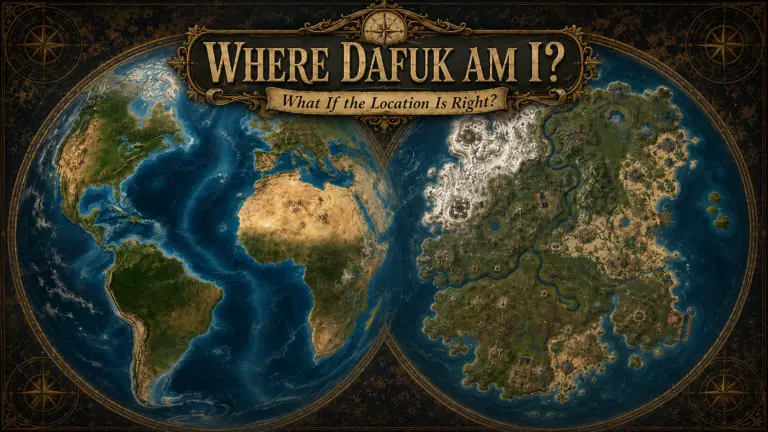
Rust’s skydome points toward an empty location in the South Atlantic. This time, we explore the real islands, legendary lands and strange waters surrounding it.
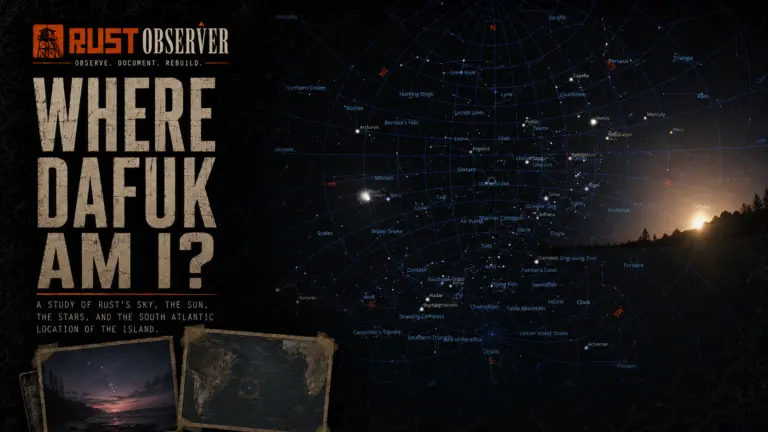
Rust’s procedural maps change with every wipe, but the sky remains fixed. By reading the Sun, solving the stars and reconstructing the sky in Stellarium, we traced the island to approximately 10°02′ S, 20°38′ W in the South Atlantic.
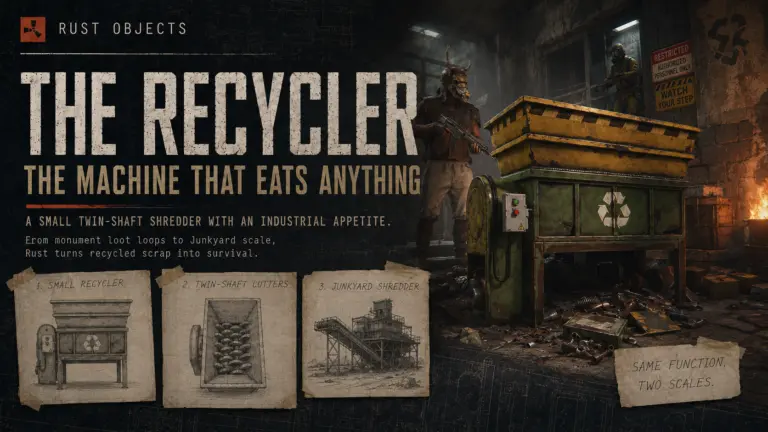
How Rust’s Recycler turns loot into material, from Facepunch’s 2016 shredder reference to the Junkyard car-scrapping machine.
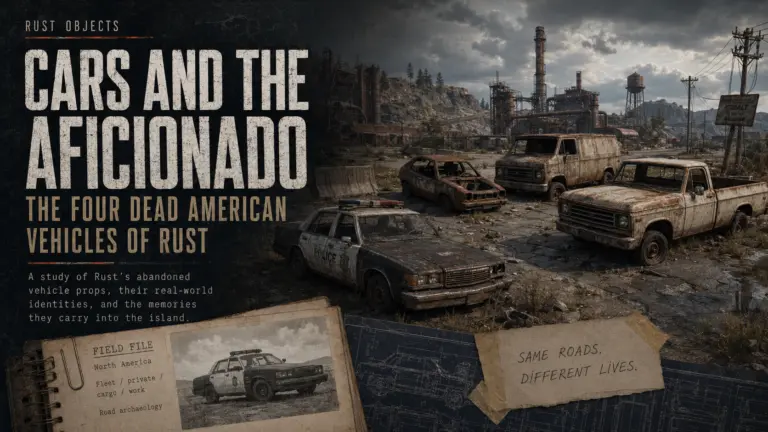
Rust’s abandoned vehicle props are not random wrecks. The Crown Victoria, Ford Pinto, Chevrolet G-10 Van, and Dodge D100 carry decades of police, horror, road-trip, and work-truck memory into the island.
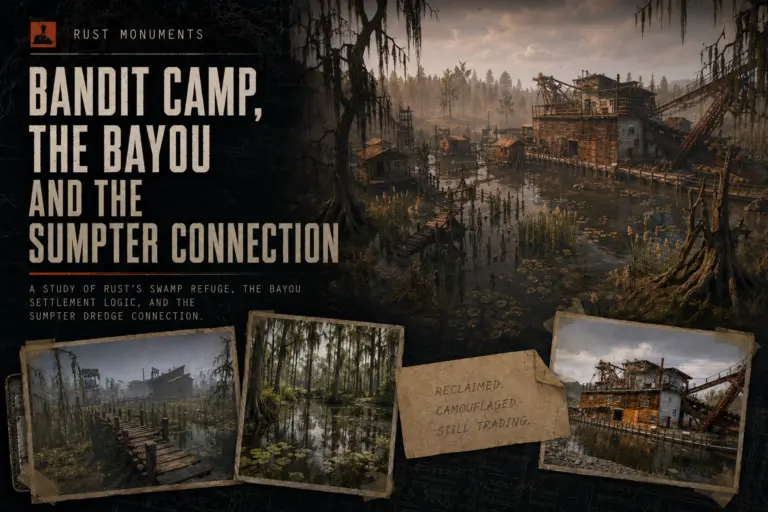
Bandit Camp is Rust’s bayou-like swamp refuge: a Bandit world built around an abandoned dredge, with a strong visual connection to Oregon’s Sumpter Valley Gold Dredge.
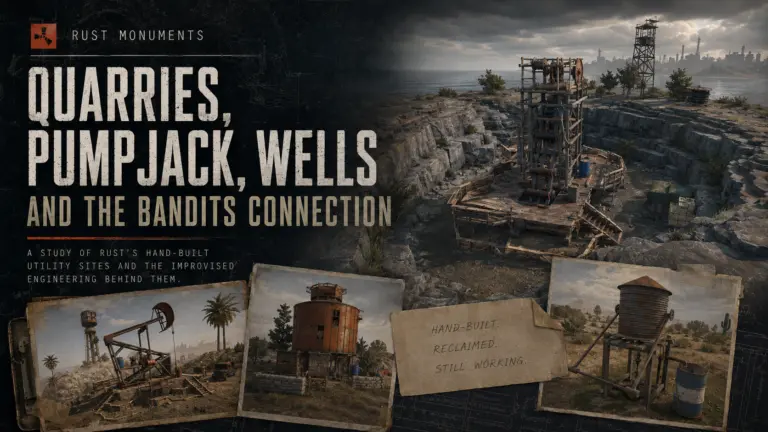
Quarries, Pumpjacks and Water Wells reveal a hidden Bandit connection in Rust: a survivor-built utility layer of water, fuel and extraction.
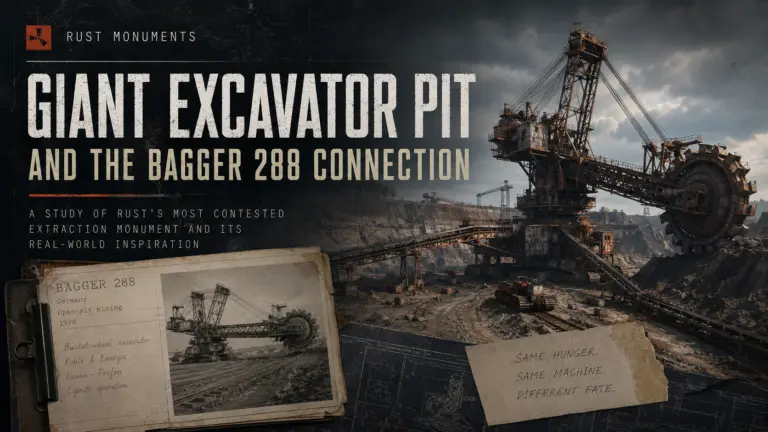
Giant Excavator Pit is Rust’s broken Bagger: a Cold War-inspired industrial monument, PvP trap, resource machine, and possible failed copy of the Bagger 288.
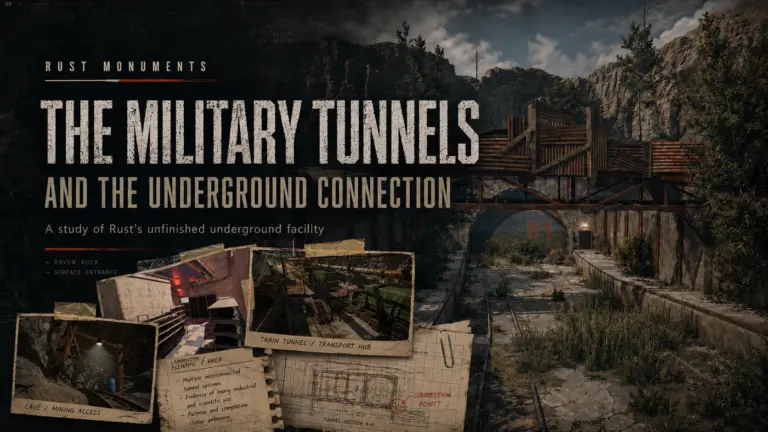
Military Tunnels looks military because of its name, Scientists, loot, and puzzle systems. But its structure tells a deeper story: cave routes, rail infrastructure, laboratory inserts, and later gameplay layers built onto an old underground dungeon.
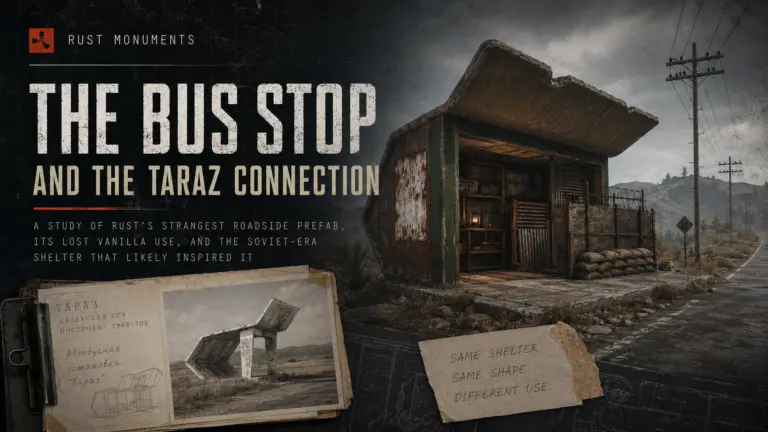
Rust’s Bus Stop traces back to Soviet roadside architecture near Taraz, Kazakhstan, revealing how a useless prefab became player folklore.
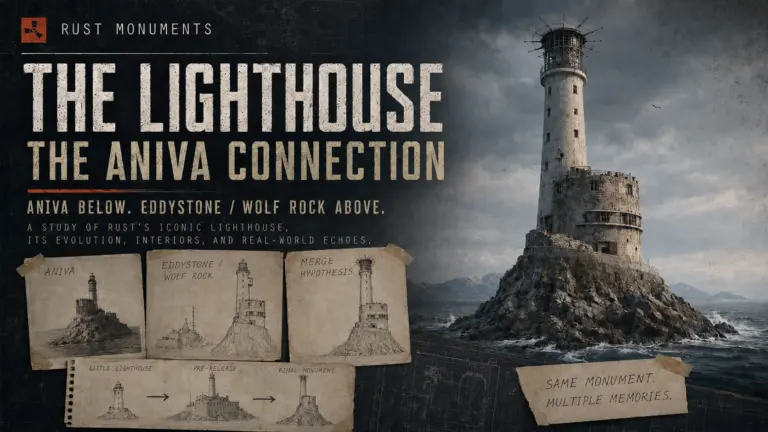
A visual hypothesis on Rust’s Lighthouse: Aniva’s inhabited body, Eddystone/Wolf Rock tower logic, and Facepunch’s playable ruin design.