

Oxidation #1 – Changing Course
Oxidation
The first Rust the world discovered was already moving away from the game Facepunch had started to build. Thirteen years later, changing course is still part of how Rust evolves.
Games that remain active for years inevitably change. Their graphics improve, their engines are upgraded, their interfaces are replaced, performance is optimized and old assets are rebuilt to meet standards that did not exist when development began. New weapons, vehicles and locations accumulate until a game can look remarkably different from the version first sold to players.
Rust has experienced all of that, but none of it is especially unusual. Better rendering, more efficient memory management or a cleaner network layer may be important to the people developing and operating a game, yet they rarely explain why someone who stopped playing for two years might return and feel that the game itself has changed around them.
Rust has another history running alongside its technical evolution.
At several points, Facepunch has introduced something that altered one of the assumptions players had learned to make about the game. Sometimes the change was immediate and obvious, as when zombies disappeared. Other changes arrived more quietly: monuments stopped behaving like simple loot locations; organized NPC settlements appeared on an island that had largely been left to the players; the sea became somewhere worth leaving the island for; military and scientific installations spread below ground and beneath the ocean; the wipe acquired events inside the game world; and old monuments are now beginning to function as pieces of infrastructure rather than isolated destinations.
None of those developments were necessary consequences of the original design. Many would have sounded strange beside the Rust that existed only a few years earlier.
This makes Rust’s history more interesting than a conventional account of progress. It can also be read as a succession of experiments in which Facepunch asks whether another version of Rust might work, then puts enough of that idea into the game for players to find out.
The first such experiment began almost immediately.

A Game the Public Thought It Recognized
Rust did not enter the world through a polished announcement explaining exactly what Facepunch intended to make. It appeared through a side door.
On January 7, 2013, Garry Newman posted ten Rust beta keys to the small Facepunch community already discussing the project. The browser version that followed ran through the Unity Web Player and carried a warning that, in retrospect, described the project unusually well:
Everything will change. Beware.
Those early testers were already discussing weapons, ammunition, crafting, inventories, buildings, roads, loot and map boundaries. Zombies were there too, and they helped make Rust look like something players already understood. The project had begun in the wake of DayZ, with vulnerable survivors dropped into a hostile multiplayer environment where scarce resources mattered and another human being could be more dangerous than anything controlled by the game.
Garry Newman later described the origin without much ceremony:
Rust started off as a DayZ clone.
The tense is important. By the time a much larger audience began discovering Rust through videos, forums and press coverage, Facepunch was already moving away from the game it had originally tried to reproduce. The first public Rust still carried much of the visible vocabulary of its inspiration, but underneath it Facepunch had encountered a much larger problem.
It could imitate mechanics associated with DayZ. It could not simply inherit the world that made those mechanics work.
DayZ inherited Chernarus from Arma. Roads, villages, forests, industrial districts, military areas and landmarks were already part of a large authored geography before a survivor entered it. Players learned that geography, used it to navigate, and attached memories to recognizable places. The world supplied destinations and relationships between them.
Facepunch did not have another Chernarus waiting to be used.
The solution was not to build a smaller imitation of one.
It was to give the players a much greater role in producing the world themselves.

The World Facepunch Could Not Build
Construction therefore became something more significant than another survival mechanic.
A forest could become a house. A hill could become a fortified position. A valley could become somebody’s territory. Walls could alter routes that had existed only minutes earlier, while neighbouring bases could produce alliances, trade, extortion or war without Facepunch scripting any of those relationships.
Newman later described this realization as the seed from which Rust grew. The map would still belong to Facepunch, but much of the geography that mattered during a wipe could be produced by the people living on it. The same procedural island could become radically different depending on who built where, which groups survived, which routes became dangerous and what the server’s players decided to make important.
That changed the centre of the game.
The original survival proposition asked what happened to players inside a dangerous world. Rust increasingly became interested in what happened when those players were given enough tools to create a dangerous world for one another.
Environmental threats remained useful because they supplied pressure, but they were predictable in ways people were not. Hunger followed rules. Radiation could be understood. An animal had relatively legible intentions. Another player could offer help, wait until trust had been established and then change their mind.
That uncertainty could generate more varied stories than a fixed morality system or an authored faction relationship. A stranger might become a neighbour, a trading partner, a future raider or the beginning of a settlement. Rust did not have to decide which role the encounter was supposed to produce.
The systems supplied possibilities. Players decided which possibilities became the story of that wipe.
For a while, that principle also meant that Facepunch did not need to populate the island with much organized human life of its own. Players supplied the architecture, politics and much of the human danger.
The zombies increasingly looked like something inherited from an earlier answer.
The First Vestige
This is why the removal of Rust’s zombies in February 2014 is more useful as a symbol than as the actual moment Rust changed direction.
By then, the decision was already older.
In early 2014, Facepunch explained that Helk had wanted the zombies gone before the Steam release. Simply replacing them with visually different mutants would not address the real problem because the project was no longer trying to remain a DayZ clone. When the February update finally removed them, the announcement made the separation explicit:
We are no longer a zombie survival game!
The zombies had become a vestige: a visible component of a direction that no longer adequately described the game growing around it.
Their disappearance made the change easy to see. It did not create the change.
That distinction becomes useful throughout Rust’s history. A direction can weaken before all of its pieces disappear, and an idea can disappear without being permanently dead. Some return years later in another context. Others survive only in community servers, seasonal events or the memory of players who encountered them when they were still part of ordinary Rust.
Facepunch had already learned something else by this point: leaving one direction did not mean it knew exactly where the next one ended.
In a March 2013 mailbag, Newman’s answer to a question about the project’s future had been unusually direct:
We really don’t know.
Later that year he again described a short development horizon: release something, observe how players responded, then decide where to go next. Rust was moving away from its first model before Facepunch possessed a finished replacement for it.
That uncertainty would become unusually visible because the game developed in public.
The Players Board a Moving Vehicle
When Rust entered Steam Early Access on December 11, 2013, the larger audience did not receive the original DayZ-like experiment. It received a game whose direction had already changed but whose new identity was still unsettled.
That created a peculiar relationship between Rust and its players.
In a traditional development cycle, most rejected prototypes disappear inside the studio. Players encounter the selected solution and rarely see how many alternatives preceded it. Rust exposed a much larger portion of that process through public builds, forums, devblogs, experimental branches and development commits.
A system could therefore become playable before Facepunch knew whether it deserved to remain part of Rust.
For players, the distinction between experiment and commitment was not always obvious. Anything functioning in the public game could begin to feel permanent simply because people had learned how to use it. Removing it later could feel like abandoning part of Rust even when Facepunch considered the system provisional.
This becomes especially important when looking backward through the archive. Rust’s development record is not one master plan slowly being checked off. It contains competing answers to the same problems, concepts that disappeared, ideas that returned under different conditions and experiments that temporarily changed the game before being rejected.
The easiest way to misunderstand that archive is to treat every proposal as a promise.
A better way is to treat it as evidence of the different Rusts Facepunch was willing to try.
Rust Replaces Rust
The most dramatic early example involved the entire game.
Only months after the Steam launch, Facepunch had already become dissatisfied with foundations inherited from the prototype. Instead of endlessly repairing them, the team began building a replacement alongside the version people were playing.
For a time, there were effectively two Rusts.
The new Experimental branch gradually accumulated the systems required to become the main game while the original implementation remained populated and recognizable. Eventually the replacement took over and the old Rust survived under the name Legacy.
The software rewrite itself is not the important part of this story. Games replace technology all the time.
What mattered was the precedent.
Something could already have players, habits, memories and a recognizable identity as Rust, and Facepunch could still decide that the better way forward involved replacing it.
An entire playable Rust could become a vestige.
After that, smaller systems had even less reason to be considered sacred.

When the Island Started Doing Something
During the first modern years, monuments helped procedural generation provide recognizable places. Airfield, Satellite Dish, Lighthouse, the Sphere and other authored structures supplied landmarks and reasons for players to cross otherwise generated terrain.
During 2015, that relationship began to change. Devblog 72 explicitly introduced support for interactive monuments, along with public utilities and more reasons to use individual locations. Development then moved toward larger dungeon-style environments such as Power Plant, Train Yard and Water Treatment, while the Military Tunnels were being developed in parallel. By December, the first generation of these new dungeon environments had reached the game.
The modern keycard puzzle system did not yet exist, and it would be misleading to project the 2018 design backward onto 2015. What had changed was the basic role of authored space. Facepunch was no longer treating monuments merely as recognizable objects with loot placed around them; their internal layouts, routes and functions were becoming part of the gameplay itself.
Facepunch had originally escaped the need to construct an enormous meaningful world by allowing players to create much of it themselves. Now it was gradually building a second layer into that same island.
Players still created the places where they lived.
Facepunch increasingly created places that gave them reasons to leave home.
That relationship has become so normal in modern Rust that it is easy to forget it had to be invented. A monument today can be a destination, a route, a puzzle, a social space, an event location or a piece of infrastructure. In the earlier game, those roles were not yet assumed.
Rust’s world was becoming more authored without becoming an authored adventure.
That difference would remain important.
Changing the Rules Without Writing the Story
Facepunch continued experimenting with systems that affected the rhythm of an entire wipe.
Progression is one example. Blueprints changed repeatedly, XP briefly reframed advancement around levels, components pushed players back toward scavenging and recycling, and later Scrap, research and Workbenches reorganized progression again.
The details matter in a dedicated history of Rust’s crafting systems, but for Changing Course the broader effect is enough: every model changed what players had reasons to do.
A progression system based on earning experience produces one pattern of movement. A system dependent on components encourages another. Scrap and research create another economy again, with different reasons to travel, recycle, trade, defend or attack.
Facepunch was not merely changing the number attached to an item recipe. It was changing the behaviours through which a player became powerful.
That sort of experiment is less visually spectacular than adding a monument, yet someone returning after a long absence could feel it immediately because the priorities of a wipe were no longer quite the same.
The world, however, was about to deliver a much more obvious surprise.
The Island Becomes Inhabited
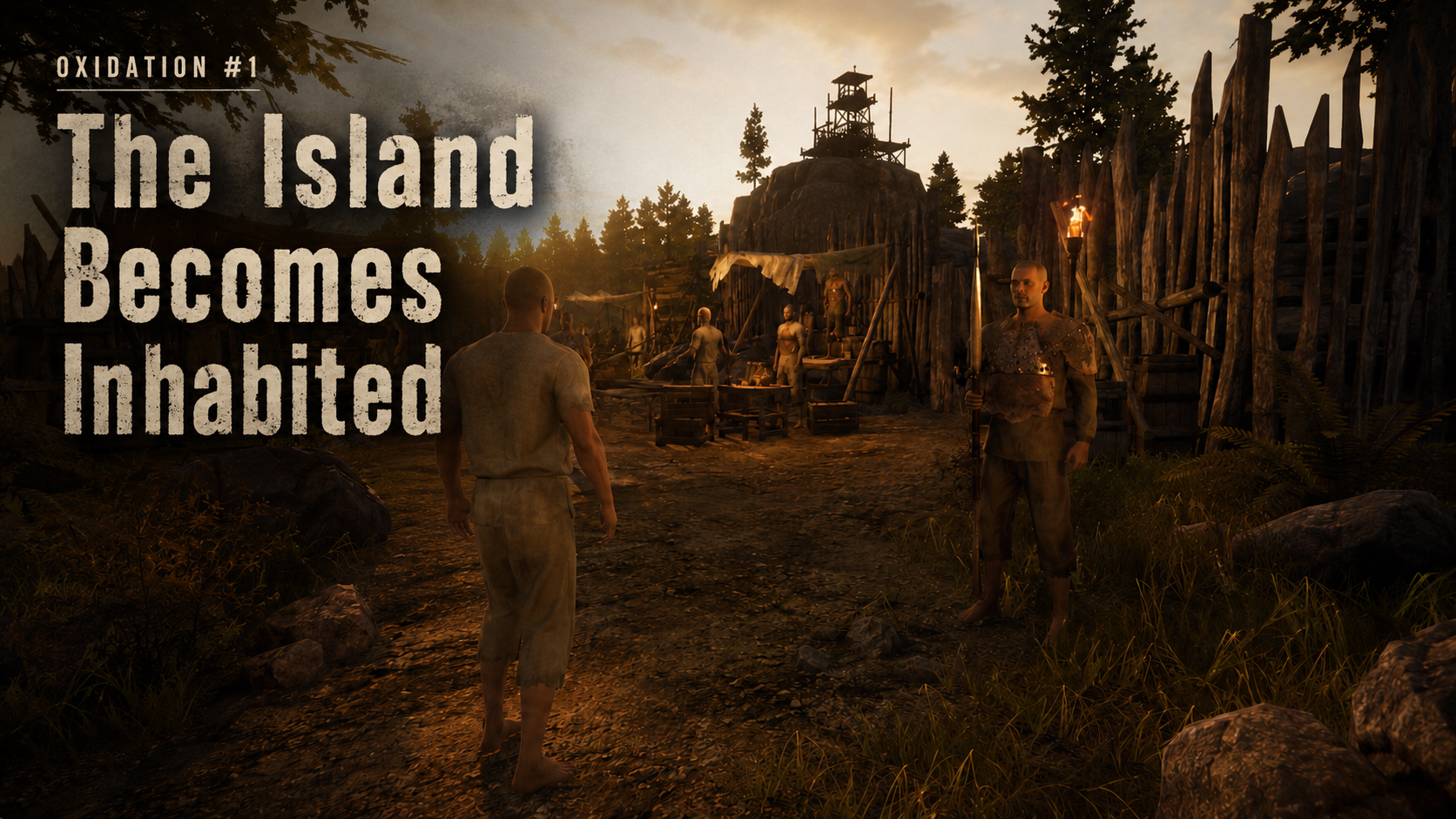
After the removal of the original zombies, Rust spent years with players supplying most of the meaningful human society on the island.
By 2018, that assumption changed.
The Compound introduced a Scientist-controlled safe zone where ordinary rules of player behaviour were deliberately suspended. Weapons, killing and looting were restricted, NPC vending machines provided commerce, and armed Scientists enforced the rules. Bandit Town followed with merchant NPCs, armed Bandits and a gambling space.
These were not simply replacements for the zombies.
They implied organization.
Someone controlled a location. Someone sold goods. Someone enforced behaviour. The island could contain territory with its own rules before any player had built a wall around it.
At almost the same time, the formal monument puzzle system added another authored layer. Facepunch described the June 2018 update as “progression through the monuments”: fuses, electrical controls and green, blue and red access cards linked locations into increasing tiers of preparation, risk and reward.
Then Cargo Ship arrived in October, guarded by Scientists and moving around the island rather than waiting at a fixed location. It combined NPC opposition, valuable loot, boats and a server-wide destination visible to everyone.
The individual features differed, but together they altered the portrait of Rust.
The island was no longer simply a procedural landscape containing player constructions and abandoned structures. It had begun to look inhabited by groups whose existence did not depend on the current population of the server.
Facepunch still did not provide a conventional storyline explaining exactly who all these people were or what the player was supposed to do about them. A survivor could ignore the Compound, never gamble at Bandit Camp and spend an entire wipe without completing the monument puzzle progression.
That freedom is fundamental.
Rust’s monuments function more like optional side quests in a game that has no mandatory main quest. Facepunch authors situations and places, but players remain free to decide whether those places matter to their own wipe.
What changed in 2018 was not that Rust acquired an authored story.
It acquired more sources from which stories could emerge.
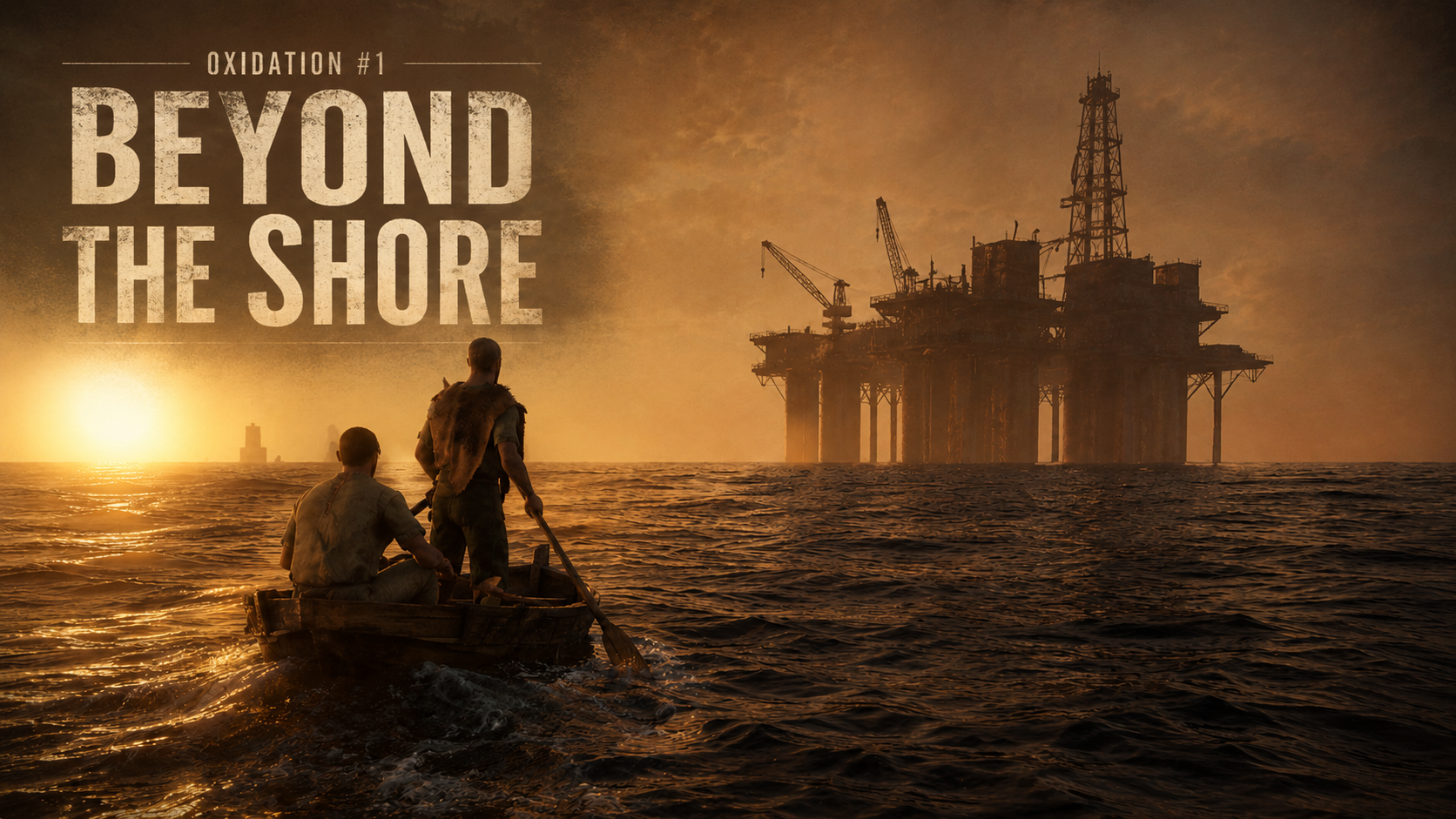
Beyond the Shore
The ocean changed in much the same way.
For years, water was primarily the thing surrounding the island. Boats made coastal travel useful, and offshore resources existed, but the land still contained most destinations that mattered.
Cargo Ship began weakening that assumption in late 2018.
Oil Rig made the change impossible to ignore in 2019.
Facepunch placed a permanent high-value monument beyond the shore, required players to deliberately travel offshore to reach it and populated it with a new generation of Scientist AI. One month later, Large Oil Rig expanded the idea with a larger, more complex offshore environment.
This was not simply an increase in map size.
The shoreline changed meaning.
Instead of functioning mainly as the boundary around the useful world, it became a departure point. Boats, fuel and maritime preparation could now lead toward some of the most contested content on the server.
The significance of this kind of change often becomes clearer only later. Oil Rig did not arrive with a promise that Rust would eventually contain submarines, underwater laboratories, modular ships and floating cities.
It did not need to.
It established that leaving the island for meaningful gameplay belonged in Rust.
Once that answer had been accepted, a much wider family of future ideas became easier to imagine.

The World Acquires Layers
By 2021 and 2022, Rust was expanding in directions that the original island had never needed.
The Freight Transit Line placed a procedural rail network beneath the terrain, complete with driveable Workcarts. Underwater Labs then introduced procedural dungeons on the ocean floor, entered through moonpools and built around exploration and puzzles. Later in 2021, Military Desert Bases appeared with Scientists and the MLRS system. In early 2022, Arctic Research Base extended the scientific and military presence into the snow biome.
Again, the point is not that Rust received several new monuments.
The portrait changed.
A player who once understood the world mostly by looking across its surface now inhabited something layered. Meaningful space existed above the terrain, below it and beneath the surrounding sea. At the same time, Facepunch’s authored environment became increasingly specific: railway infrastructure, research facilities, military systems and specialized Scientist occupations were becoming ordinary components of the landscape.
The island did not suddenly acquire a linear narrative explaining all of this.
Instead, the environment became capable of suggesting questions that the older Rust had rarely asked.
Who built these places? What connected them? Why are Scientists occupying them? What was this infrastructure intended to do?
Facepunch could leave those questions incomplete because the player was still not required to follow a storyline.
The authored world could become richer without taking the sandbox away.
A Different Kind of Change
Not every major redirection needs to change the landscape.
The 2022 Combat Update is useful precisely because it did not.
By that point, Rust’s recoil and gun handling had become deeply embedded in competitive culture. Players had invested years mastering systems that were no longer experimental in any ordinary sense. Facepunch nevertheless decided that the established gunplay was producing a game it wanted to change.
Whether individual players preferred the old or new model is a different argument.
Historically, the decision demonstrates that even a skill around which players had built identity and status could be reconsidered.
A long period of familiarity did not necessarily transform a system into an untouchable part of Rust.
The same willingness that had once removed zombies or replaced Legacy could still operate years after release, even when the change affected something players had spent thousands of hours learning.
The Wipe Enters the World
In 2023, Facepunch turned toward something that had always been central to Rust while remaining strangely external to the island itself.
The wipe.
Players understood wipes perfectly. Servers reset, buildings vanished, possessions were lost and everyone eventually returned to the beach. The wipe defined the rhythm of Rust without needing much explanation inside Rust.
The Nuclear Missile Silo began changing that relationship.
Deep beneath the monument, an ICBM and a laptop displayed a countdown. As the cycle approached its reset, Facepunch’s Wipe Event increased NPC activity around the island. The May 2023 update explicitly connected the countdown to the approaching cycle reset.
Rust did not suddenly acquire a victory condition or a compulsory ending.
The wipe simply gained something resembling a final act.
An event that had always been understood outside the game could now be reflected inside the world. The island had begun participating in its own reset.
That may sound like a small narrative distinction, but it opened another possibility. A wipe did not have to remain only the moment when an administrator or update cleared the server.
It could become an event Rust itself knew how to react to.
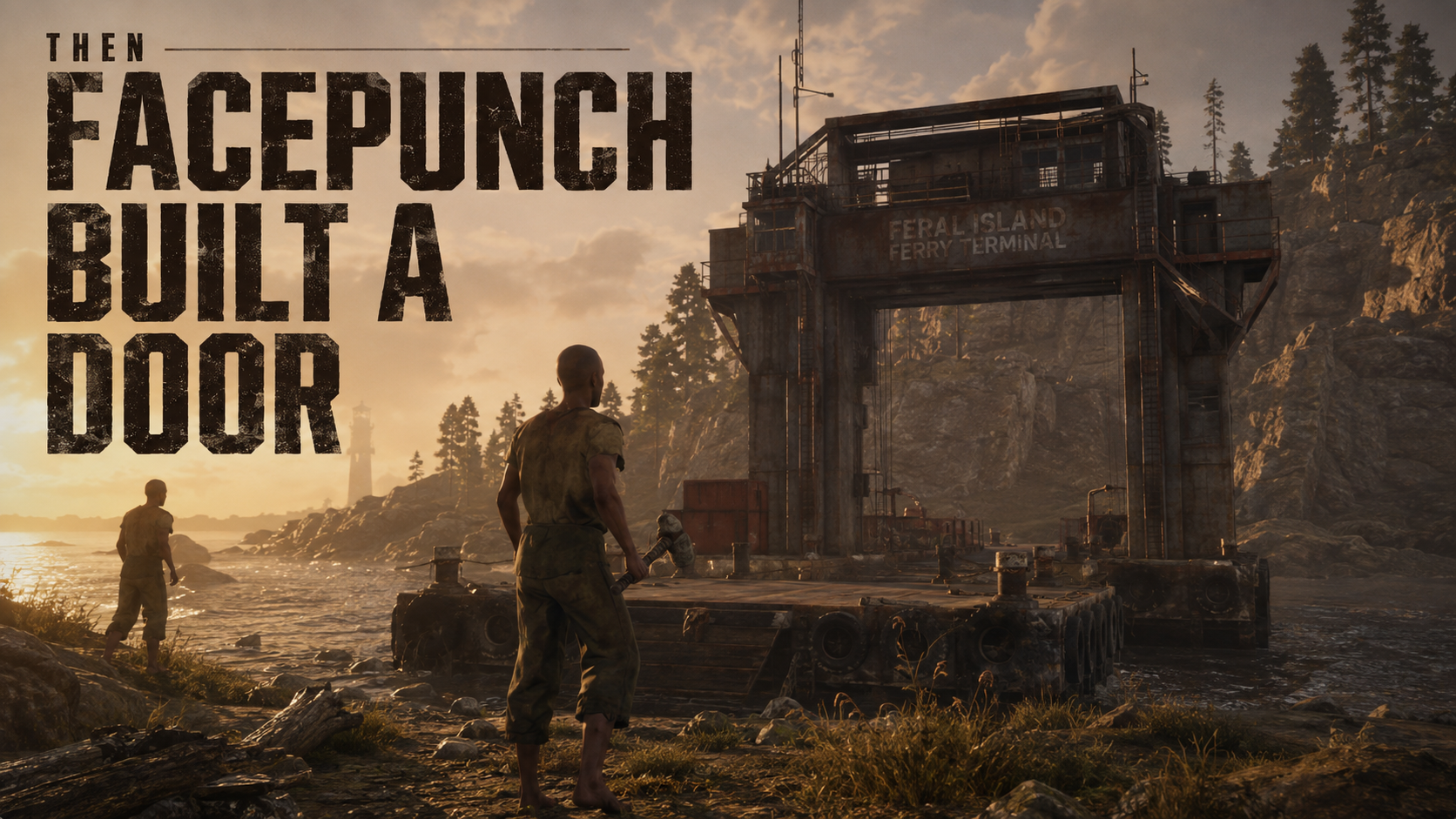
Then Facepunch Built a Door
Two months later, Ferry Terminal appeared.
The July 2023 devblog was unusually explicit about its incompleteness. Facepunch called the monument a “first preview” and said it would later be expanded to reach its full potential as a terminal. Until then it contained ordinary loot, a recycler and a subway connection.
This makes Ferry Terminal one of the most interesting pieces of architecture in Rust because players were allowed to see the question long before they received the answer.
For most of Rust’s history, servers had behaved as separate worlds. You could leave one and join another, but not as a continuous survivor carrying the same material history through a larger connected universe.
That possibility was not entirely new.
In Devblog 69, Garry Newman described one of Rust’s early ambitions as being closer to an MMO, with “a single huge universe that all the servers are connected in,” rather than separate servers maintaining independent progression.
The Rust that actually developed spent most of the following decade doing something else. Independent servers became one of its defining realities.
Then Facepunch placed a terminal on the coast.
The destination was missing, but the architecture was already pointing outward.
In January 2024, Facepunch publicly described Nexus as a way of clustering servers and allowing players to travel between them through the game, while emphasizing that this would be an optional alternative rather than a replacement for ordinary independent servers. The same discussion imagined specialized maps that could eventually belong to a much larger connected environment.
Once again, an old possibility had returned to a very different Rust.
Rust Can Derive Another Rust
Primitive in 2025 made another principle unusually easy to see.
Instead of replacing the normal game, Facepunch created an official mode that deliberately removes or restricts large pieces of modern Rust. High-technology weapons, several advanced monuments and events, Scientists and other systems can disappear while siege weapons and lower-tech alternatives become more important.
Facepunch’s own introduction framed the experiment with essentially the same question this article has been following: what if Rust’s early game could last indefinitely?
Primitive demonstrates that Rust is not simply the total number of features accumulated inside it.
Remove enough systems and the relationships between those remaining change. Movement changes, raiding changes, progression changes and the value of specific resources changes. The result is not merely less Rust.
It is another derivation of Rust.
The same logic helps explain why combining every abandoned idea from the development archive would not produce the definitive version of the game. A Rust containing the complete original DayZ-like structure, permanent zombies, every progression system, every discarded camera mode, every automation experiment and every future ambition simultaneously would not be more complete.
It would be another game.
Rust’s identity has been formed through exclusion as much as addition.
The Ocean Becomes Another World
By 2026, the offshore experiment of 2019 had grown far beyond Oil Rig.
The Naval Update introduced player-built modular boats and opened the Deep Sea as a distinct offshore region containing tropical islands, Ghost Ships, Scientist-controlled vessels and Floating Cities. Facepunch describes the Deep Sea as something that opens and closes like a world event rather than ordinary mainland territory, and says it intends to expand it as a “bridge between worlds.”
The progression is revealing because none of it had to be planned in full when the first Oil Rig appeared.
The ocean began as surrounding space.
Then it became a route.
Cargo Ship and Oil Rigs made it a destination.
Underwater Labs pushed meaningful play beneath its surface.
The Deep Sea now allows it to behave almost like another region of the world.
A major change in Rust frequently works this way. It does not have to reveal the final destination. Sometimes its historical importance lies in making the next possibility acceptable.
Once the game has crossed one boundary, the next one no longer looks quite as strange.
A World Built to Be Used
There is another characteristic of Rust’s monuments that makes the latest changes especially interesting.
The authored architecture is unusually dense with usable space.
Rust does not generally construct enormous cities made mostly from façades that exist only to make the world look populated. Monuments are comparatively compact, and their buildings, rooftops, tunnels, rooms, machines and routes are usually places the player can enter, climb, loot, fight through or otherwise exploit.
That makes the exceptions conspicuous.
A sealed room in Rust attracts attention precisely because players have learned that most of what Facepunch builds is there to be used. Sometimes those inaccessible areas remain exactly what they appear to be. They are not proof that every locked door conceals a feature planned ten years in advance.
But Rust’s history also shows that existing architecture can later acquire a purpose its players could not previously access.
The power-station building inside Power Plant is a particularly good example.
For years, parts of it were visible from outside. Players could see rooms and equipment that belonged physically to the monument but could not simply walk in and operate them.
Then came Power Trip.
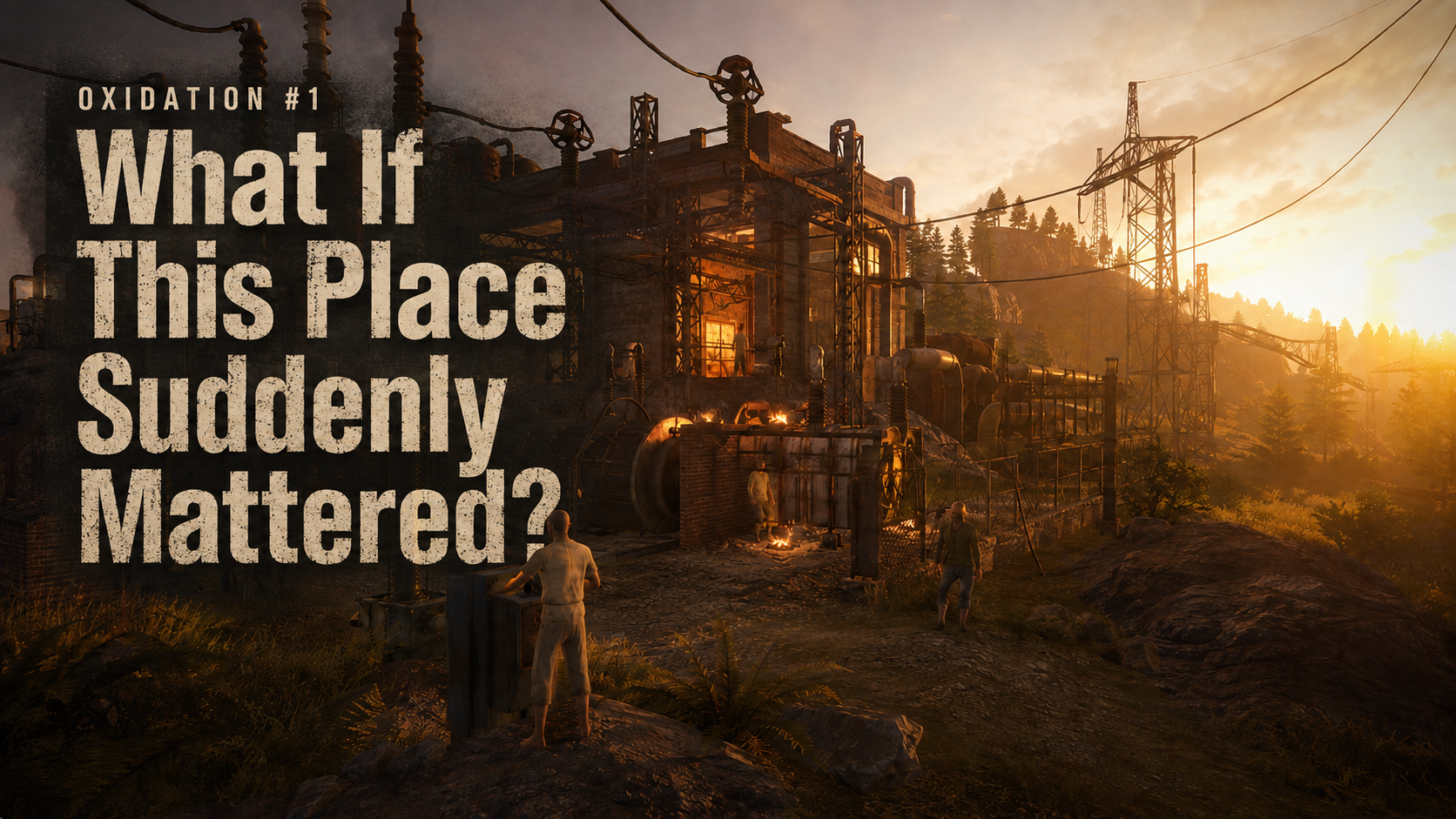
What If This Place Suddenly Mattered?
The August 2026 update introduced what Facepunch calls Player Maintained Monuments. Power Plant could now be restarted with Heavy Fuses, supplying an island-wide electrical grid. Powerline poles could provide usable electricity. Other monuments received functions tied to wider systems: Water Treatment could activate water dispensers around the map, Oil Rig could pump crude toward Dome, Supermarket could operate a powered freezer, Launch Site could trigger a satellite crash and Airfield could initiate aviation events.
None of these individual rewards needs to redefine Rust.
The change lies in the relationship between them.
For most of Rust’s history, a monument was primarily somewhere the player went. You travelled to Power Plant, explored it, fought there, solved its puzzle, took what you needed and eventually left.
Power Trip asks players to consider what happens when the condition of that monument begins to matter after they leave.
Facepunch did not need another Power Plant. It returned to a place that had already existed for years and activated more of what was already there.
That is particularly interesting when placed beside the decision that helped create Rust in 2013.
The original solution had been to stop trying to author all of the meaningful environment and give players the tools to create much of it themselves.
Facepunch nevertheless continued building its own layer every year: monuments, factories, tunnels, bases, harbours, laboratories, transport systems, military installations and offshore structures. Some were immediately rich in gameplay. Some initially contained spaces with little obvious utility. Collectively, they became a permanent world surrounding the temporary world players rebuilt after every wipe.
Power Trip begins using that accumulated world differently.
The change is not that Facepunch has taken authorship back from the players. Rust still does not require someone to complete Power Plant, clear Oil Rig, visit Missile Silo or follow a prescribed monument progression in order to have a valid wipe. A player can ignore enormous parts of Facepunch’s authored content and continue building, farming, trading, raiding, roleplaying or fighting according to goals of their own.
What Facepunch can now do is make an old part of its environment important enough that players invent reasons to care about its condition.
That distinction became clearer only one month after Power Trip.
From Optional Reward to Shared Pressure
The September 2026 update connected the Drone Marketplace to the Power Plant system.
Drone commerce had allowed players to purchase remotely from vending machines instead of physically travelling across the map to every seller. Under the new system, the Marketplace accumulates power while enough Heavy Fuses are active at Power Plant, becomes available once its battery reaches the required charge and can deactivate again if that power is not maintained.
Rust has not made Power Plant compulsory.
If the drones are unavailable, players can still travel to shops and buy in person.
That alternative is precisely what gives the change teeth.
The server does not encounter an artificial message saying that the next chapter cannot begin until somebody completes Power Plant. Instead, a convenience players have spent years treating as normal can disappear until somebody decides that restoring the infrastructure is worth the effort.
That is a very different source of gameplay from simply placing more loot inside a monument.
The environmental system creates pressure, and the players decide what that pressure becomes.
On a roleplay server, it can become public infrastructure, maintenance, political agreements or a reason to organize a community around keeping services running. On a PvP server, the same system can produce predictable movement, resource transport, contested territory and fresh opportunities to ambush the people doing the work.
Facepunch does not have to program those stories separately.
It creates the condition.
Players provide the interpretation.
That is remarkably close to the principle that emerged from the first great change of course, but operating from another direction.
In 2013, the answer was to let players create the world that mattered.
In 2026, Facepunch has accumulated enough of its own world that the environment itself can increasingly give those players reasons to create new stories around it.
A building can remain optional while becoming a source of scenario.
That is a significant change in what a monument can be.
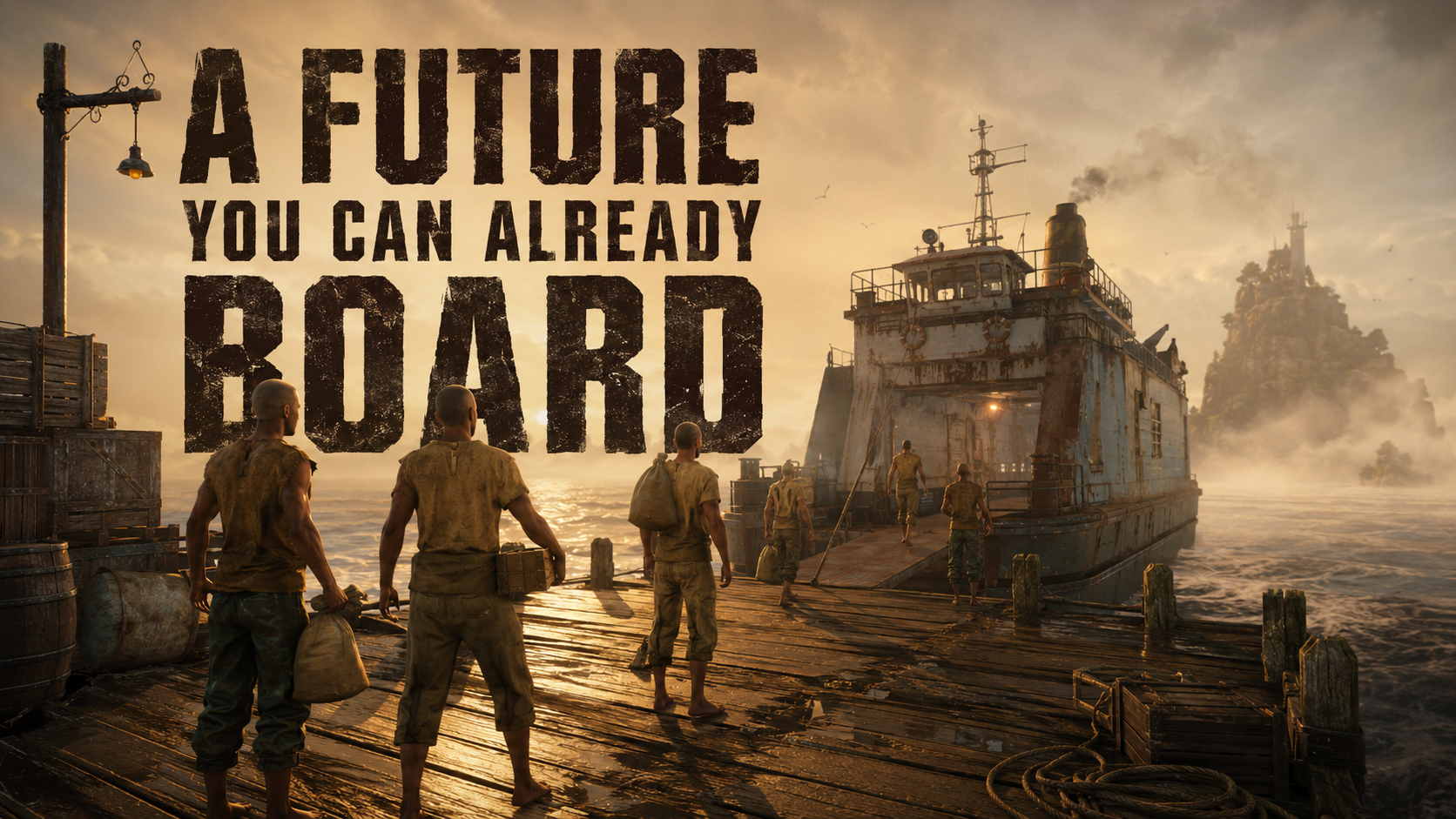
A Future You Can Already Board
Nexus provides a different kind of ending to this history because its final answer does not exist yet.
In September 2026, Staging tests were already linking two islands, Red and Blue. Contemporary footage shows Ferry Terminals displaying destinations and arrival times, ferries physically collecting players and their belongings, and the journey continuing to the edge of one world before the player reaches the linked server.
The wider release has been delayed, and Facepunch’s current public roadmap now places the Nexus System, Server Transfer and Deep Sea Nexus in 2027.
That does not make Nexus irrelevant to the story of 2026.
It makes the moment unusually revealing.
In 2023, Facepunch placed a terminal on the island before the journey existed.
Three years later, testers can board the ferry.
The final structure can still change. The exact relationship between servers can change. The release schedule can change. Rust’s development history gives us every reason to take those possibilities seriously.
But an assumption that defined the game for more than a decade has already acquired a working alternative.
This is what many of Rust’s earlier turns must have looked like before hindsight made them seem natural.
The first interactive monuments did not announce the entire future of puzzles and Player Maintained Monuments.
The Compound did not arrive with a complete explanation of every future NPC settlement.
Oil Rig did not announce Floating Cities.
Underwater Labs did not announce the Deep Sea.
Ferry Terminal did not need to function on the day it appeared for the direction it represented to matter.
A change can be historically important before anyone knows its final shape.
What Rust Allows Itself to Become
This is why a history of Rust built only from feature lists misses something important.
Individual additions affect the meaning of systems around them.
NPC settlements change the social geography of the island. Aircraft change the value of distance and walls. Offshore monuments change the coastline. Underground transport changes surface routes. A wipe event changes the relationship between the game world and the server reset. Player-maintained infrastructure changes what an old monument can mean. Nexus may change something even more fundamental: whether the server itself should always be understood as the boundary of the player’s material world.
Each large experiment produces another possible derivation of Rust.
Some survive and become so familiar that their original strangeness disappears.
Others produce behaviours Facepunch does not want and are removed.
Some arrive before the rest of Rust is ready to support them.
Some return years later because the game around them has changed.
And some remain optional forever, contributing another possible way to play without becoming the definition everyone must follow.
That flexibility is important. Facepunch can make the island more inhabited without forcing a player to participate in NPC society. It can build elaborate monument puzzles without requiring every survivor to complete them. It can create Primitive without replacing the technological Rust beside it. Nexus is explicitly planned as an optional way to connect worlds rather than the mandatory replacement for independent servers.
The sandbox survives not because Facepunch refuses to author content, but because authored content usually creates possibilities rather than obligations.
Vestiges
Changing course also means leaving things behind.
The original zombies disappeared from ordinary Rust, yet versions of that fantasy survive through seasonal hostile humanoids and community modifications. Legacy stopped being the current game, but old places and visual ideas later became material Facepunch could revisit. Industrial production concepts have disappeared from one context and returned in others. Vehicle ideas waited years between concept and practical implementation.
The early ambition for interconnected worlds is perhaps the most dramatic example. Independent servers defined Rust for most of its existence, yet Nexus has brought part of that old direction back after more than a decade.
This is why vestige is more useful than simply calling an idea removed.
A vestige is evidence that another direction once existed.
It may survive as an asset, a piece of terminology, a seasonal echo, a community system or simply a question Facepunch eventually decides to ask again.
The answer can change because Rust has changed around it.
The Game You Return To
This may be one reason Rust has remained unusually capable of surprising returning players.
Someone who left when player society supplied nearly all of the important human presence can return to Scientists, Bandits, shops and safe zones.
Someone who remembers monuments largely as places containing loot can return to interconnected puzzle progression.
Someone who remembers the sea mostly as the empty space surrounding the map can return to Cargo Ships, Oil Rigs, submarines, Underwater Labs, Ghost Ships and Floating Cities.
Someone who understood the wipe entirely as an external server reset can return to a missile countdown and escalating wipe event.
Someone who remembers Power Plant as somewhere to loot can now discover that the server may have reasons to care whether the plant is operating.
And someone who spent more than a decade understanding server selection as the moment one world was abandoned for another can now watch a ferry leave one island carrying a survivor toward the next.
The important difference is not simply that Rust contains more things.
The old description of the game periodically becomes incomplete.
That is much rarer than technical progress. Games sold as relatively finished products usually make their largest identity decisions before the public is asked to live with them. Even many long-running games spend most of their later development expanding a formula that has already been accepted.
Rust has repeatedly been willing to reopen parts of the formula itself.
That gives players another reason to return besides a larger content catalogue.
They may have to discover what kind of Rust exists now.

Changing Course
Rust did not become Rust when Facepunch removed its zombies.
The more important change had happened earlier, when Facepunch stopped trying to reproduce the kind of authored world that had inspired the project and allowed players to create much more of the world that mattered themselves.
That decision did not reveal the final destination.
It established that the destination could change.
Over the next thirteen years, Facepunch kept testing that freedom. It replaced the playable game itself. It transformed landmarks into interactive environments, then into puzzles. It allowed organized NPC populations back onto an island that had largely been surrendered to players. It moved significant gameplay offshore, underground and beneath the sea. It let the wipe enter the world. It experimented with official derivations that deliberately remove parts of modern Rust. It built a terminal before the destination was ready.
And now it is returning to monuments that have existed for years and asking another kind of question.
What if this place mattered differently?
Power Plant does not suddenly become Rust’s main quest. Rust still has no compulsory route through its monuments, and the player remains free to make an entirely different life on the same island.
What has changed is the amount of potential contained in the world Facepunch has built around those players.
A room that was once inaccessible can become gameplay.
A monument that was once a destination can become infrastructure.
Infrastructure can create a need.
A need can bring players together or give them another reason to kill one another.
Facepunch still does not have to decide which story happens next.
That remains the player’s job.
The first major experiment in Rust was to stop building the whole world for the player and see what the player would make instead.
Thirteen years later, Facepunch has built a substantial world around that experiment — and is still finding new ways to make it matter.
Rust’s history is not simply a record of features added to a survival game. It is a long series of possible Rusts made playable, one question at a time.
References and Further Reading
Early Rust and the First Change of Course
Facepunch Forum — “Beta Keys,” January 2013
Archived copy of the early Facepunch thread documenting the first currently identified distribution of Rust access to outside players.
Archived Facepunch Forum — Beta Keys
Facepunch Forum — Rust Section, January 2013
An archived view of the early Rust forum section, preserving discussion from the first period of external testing.
Archived Facepunch Rust Forum — January 2013
PlayRust — Browser Alpha, February 2013
Archived Unity Web Player page from the early browser period, including the warning that everything could change.
Archived PlayRust Browser Alpha
Garry Newman — “Mailbag,” March 5, 2013
Newman describes Rust as an experiment, says Facepunch does not yet know exactly where it is going, discusses moving away from zombies and mentions construction and other NPC ideas.
Garry Newman — Mailbag
Garry Newman — “The Story of Rust,” June 2013
A contemporary account of Rust’s origin as a DayZ clone, the difficulty of competing with Arma’s authored world, and the move toward player-created environments and player-driven danger.
Garry Newman — The Story of Rust
Cheerful Ghost — Interview with Garry Newman, September 3, 2013
Newman describes Facepunch’s short development horizon and the process of releasing ideas, observing what happens and deciding where to go next.
Cheerful Ghost — Interview with Garry Newman
Facepunch — “Early Access,” December 11, 2013
The official Steam Early Access announcement and contemporary warning that Rust remained unfinished and would continue developing publicly.
Facepunch — Early Access
PC Gamer — Garry Newman on Rust and Player Freedom
A central contemporary source for the decision to let players create much more of the meaningful world themselves, including Newman’s formulation: “We give them the tools, they make the world.”
PC Gamer — Garry Newman on Rust and Player Freedom
Facepunch — “Status Report #001,” January 13, 2014
Documents the early post-Steam direction, player cooperation and the intention to remove zombies rather than simply redesign them.
Facepunch — Status Report #001
Facepunch — “6th Feb Update,” February 6, 2014
Primary source for the removal of Rust’s original zombies and the declaration that Rust was no longer a zombie survival game.
Facepunch — 6th Feb Update
Replacing Rust and Testing New Directions
PC Gamer — “Rust ‘reboot’ is coming and everyone’s going to get it,” June 25, 2014
Contemporary coverage of the Experimental rewrite and Facepunch’s decision to switch tracks while continuing to develop Rust.
PC Gamer — Rust Reboot
Facepunch — Devblog 72, August 6, 2015
Introduces support for interactive monuments, public utilities and a broader functional role for authored locations.
Facepunch — Devblog 72
Facepunch — Devblog 75, August 27, 2015
Documents the development of new dungeon-style monuments, including Power Plant, Train Yard and Water Treatment, as environments designed around exploration and gameplay rather than simple landmarks.
Facepunch — Devblog 75
Facepunch — Devblog 89, December 3, 2015
Documents the first implementation of the new dungeon environments into procedural maps, marking the transition from their design phase into playable Rust.
Facepunch — Devblog 89
Facepunch — Devblog 69, July 16, 2015
An important historical precursor to Nexus. Garry Newman describes an early ambition for Rust as a single huge universe in which servers could be connected rather than entirely independent worlds.
Facepunch — Devblog 69
Facepunch — Devblog 100, July 7, 2016
Introduces the XP System, a major experiment in how progression should work during a wipe.
Facepunch — Devblog 100
Facepunch — Devblog 134, November 3, 2016
Removes XP and introduces Components, with Helk explaining why the XP direction had changed the feel of Rust in ways Facepunch no longer wanted.
Facepunch — Devblog 134
The Island Becomes Inhabited
Facepunch — “The Compound Update,” May 3, 2018
Introduces the Scientist-controlled Compound as a safe zone with NPC vending and enforced behavioural rules.
Facepunch — The Compound Update
Facepunch — “The Puzzle Update,” June 8, 2018
Formalizes monument progression through switches, fuses and tiered access cards.
Facepunch — The Puzzle Update
Facepunch — “The Bandit Town Update,” August 2, 2018
Introduces Bandit Town as an NPC-populated settlement with merchants, armed Bandits and gambling.
Facepunch — The Bandit Town Update
Facepunch — “The Cargo Ship Update,” October 4, 2018
Introduces a moving Scientist-guarded offshore event combining maritime travel, PvE and competition for valuable loot.
Facepunch — The Cargo Ship Update
Beyond the Shore and Beneath the Island
Facepunch — “The Oil Rig Update,” March 7, 2019
Establishes a major high-value offshore monument and substantially revised Scientist AI, turning the ocean into a deliberate destination for progression and conflict.
Facepunch — The Oil Rig Update
Facepunch — “Softcore Gamemode Update,” February 4, 2021
Introduces the Drone Marketplace, allowing remote purchases from compatible vending machines and explicitly aiming to make trade safer and more common.
Facepunch — Softcore Gamemode Update
Facepunch — “Freight Transit Line,” March 4, 2021
Introduces the underground rail network and driveable Workcarts, making the space beneath the island part of regular exploration and transportation.
Facepunch — Freight Transit Line
Facepunch — “Going Deep,” August 5, 2021
Introduces submarines and procedural Underwater Labs on the ocean floor.
Facepunch — Going Deep
Facepunch — “MLRS & Desert Base Update,” November 4, 2021
Introduces procedural Military Desert Bases, Scientist resistance and the MLRS.
Facepunch — MLRS & Desert Base Update
Facepunch — “Arctic Update,” February 3, 2022
Introduces Arctic Research Base and extends specialized scientific infrastructure into the Arctic biome.
Facepunch — Arctic Update
Facepunch — “The Combat Update,” June 2, 2022
A major reconsideration of established Rust gunplay after years of players mastering the previous recoil and weapon-handling systems.
Facepunch — The Combat Update
The Wipe, Ferry Terminal, and Nexus
Facepunch — “R.U.S.T,” May 4, 2023
Introduces the Nuclear Missile Silo and Wipe Event, giving the approaching reset an explicit presence inside the game world.
Facepunch — R.U.S.T
Facepunch — “Deep Sea,” July 6, 2023
Introduces Ferry Terminal as a first preview of a monument that would later reach its full potential as a terminal.
Facepunch — Deep Sea, 2023
Facepunch — “Surviving a Decade,” January 4, 2024
The clearest official description of Nexus as a system for clustering servers and allowing players to travel between them in-game while keeping ordinary independent servers available.
Facepunch — Surviving a Decade
Alternative Rusts and the Current Turn
Facepunch — “Primitive,” February 6, 2025
An official experiment built around extending Rust’s primitive phase by deliberately removing or restricting large parts of the modern game.
Facepunch — Primitive
Facepunch — “Naval Update,” February 5, 2026
Introduces modular boats, the Deep Sea, Floating Cities, Tropical Islands and Ghost Ships, and describes the Deep Sea as a future bridge between worlds.
Facepunch — Naval Update
Facepunch — “Power Trip,” August 6, 2026
Introduces Player Maintained Monuments and connects existing locations through electricity, water, industrial processes and server-wide events.
Facepunch — Power Trip
Facepunch — “Breach and Clear,” September 3, 2026
Connects Drone Marketplace operation to Power Plant, making remote commerce dependent on the state of player-maintained infrastructure.
Facepunch — Breach and Clear
Facepunch — Rust Roadmap
Used only for current direction rather than as a guarantee. The roadmap currently places Nexus System, Server Transfer and Deep Sea Nexus in 2027.
Facepunch — Rust Roadmap
ShadowFrax — September 2026 Nexus Staging Coverage
Contemporary video coverage of Nexus operating in testing, including linked Red and Blue islands, Ferry Terminal schedules and physical ferry travel between servers.
ShadowFrax — September 2026 Rust Update
Vestiges
Chaos Code — ZombieHorde
A community-server example of the zombie concept surviving after its removal from ordinary Rust.
Chaos Code — ZombieHorde
uMod — Night Zombies
Another example of server owners reintroducing zombie-like gameplay through community modifications.
uMod — Night Zombies
Related Rust Observer Reading
Rust Monuments — How the Island Was Built
A companion chronology documenting the physical development of Rust’s monuments. Changing Course uses many of the same landmarks for a different purpose: examining how their changing roles altered what Rust itself could be.
Rust Monuments — How the Island Was Built
Source Note
Rust has been developed unusually publicly. This article therefore distinguishes between released systems, contemporary experiments, retrospective explanations and features currently being tested. A feature appearing in a devblog, public development branch or roadmap demonstrates a direction being explored; it does not mean that its eventual implementation was predetermined.
Views: 3